





Hatch Chile Terminology Guide
The definitive guide to New Mexican chile language—why we spell it "chile" not "chili," what industry insiders actually call green chile peppers, and the authentic vocabulary of the Hatch Valley.
In New Mexico, we spell it "chile" (with an E), never "chili" or "chilli." And while the rest of the world might say "hatch chili peppers" or "green chile peppers," here in the Hatch Valley we simply call it "chile" or "green chile"—the word "pepper" is almost never used by locals or industry professionals.
- The History of "Chile" vs "Chili" Spelling
- Nahuatl Origins: Where It All Began
- The Congressional Record & Official Recognition
- Why We Don't Say "Pepper" in New Mexico
- Industry Terminology: What Farmers Actually Say
- Regional Spelling Differences Worldwide
- Common Terminology Mistakes to Avoid
- Complete Hatch Chile Glossary
- Frequently Asked Questions
If you've ever searched for "hatch chili peppers," "green chilli," or "hatch pepper," you're not alone. The internet is filled with conflicting spellings and terminology for New Mexico's most famous crop. But here's something that might surprise you: those search terms would get you strange looks in the Hatch Valley.
As a 5th-generation descendant of Joseph Franzoy—the first commercial chile farmer in Hatch—and a current board member of the Hatch Chile Association, I've spent my entire life surrounded by the language and culture of New Mexican chile. This guide will teach you the authentic terminology we use in the industry, explain the fascinating history behind the spelling debates, and help you speak about Hatch chile like a true New Mexican.
The History of "Chile" vs "Chili" vs "Chilli" Spelling
The great spelling debate has divided kitchens, confused grocery shoppers, and sparked more arguments than whether to put beans in chili con carne. But unlike that debate (we'll get to it), the spelling question has a definitive answer—at least for New Mexicans.
Nahuatl Origins: Where the Word Began
Every version of this word traces back to the same source: the Classical Nahuatl word chīlli (pronounced "CHEE-lee"), the language of the Aztec people of central Mexico. The Aztecs cultivated chile peppers for thousands of years before Spanish colonizers arrived, and their word for this fiery fruit entered the global vocabulary through the Columbian Exchange.
Nahuatl: Chīlli
The original Aztec word for the hot pepper fruit, recorded in 16th-century Nahuatl dictionaries. The double "l" represented a specific sound in the language.
Spanish Adoption: Chile
Spanish colonizers in Mexico adapted the Nahuatl word to Spanish orthography, dropping one "l" and creating "chile" (pronounced "CHEE-leh"). This spelling spread throughout Latin America.
English Variants Emerge
The word enters English in multiple forms: "chille," "chile," and "chilli." British English favored "chilli" while American usage remained inconsistent.
American "Chili" Develops
The anglicized spelling "chili" becomes common in American English, particularly associated with the meat-and-bean dish "chili con carne" originating in Texas.
Congressional Record Recognition
Senator Pete Domenici of New Mexico enters a statement into the Congressional Record (Nov. 3, 1983) declaring that "chile" is the correct spelling for New Mexican peppers, distinguishing them from Texas "chili." A celebrated defense of the spelling — though a statement for the record, not a law.
New Mexico State Question
The New Mexico Legislature declares "Red or Green?" the official state question (House Joint Memorial, 1996), then writes it into the state-symbols statute in 1999 (NMSA § 12-3-4) — the statute uses the "chile" spelling throughout.
The Congressional Record: Senator Domenici's Famous Speech
In 1983, New Mexico's longtime Senator Pete Domenici took to the floor of the United States Senate to set the record straight. His speech, entered into the Congressional Record, remains the most authoritative—and entertaining—defense of New Mexican chile spelling ever delivered.
"Knowing that criticizing the dictionary is akin to criticizing the Bible, I nevertheless stand here before the full Senate and, with the backing of my New Mexican constituents, state unequivocally, that the dictionary is wrong."
— Senator Pete Domenici, Congressional Record, 1983
Senator Domenici didn't stop there. He drew a sharp distinction between New Mexican chile and what he called "that inedible mixture of watery tomato soup, dried gristle, half-cooked kidney beans, and a myriad of silly ingredients that is passed off as food in Texas and Oklahoma."
His point was clear: chile (with an E) is the pepper itself—the magnificent fruit we grow here in the Hatch Valley. Chili (with an I) is the dish—the meat stew that uses chile as one of many ingredients.
Chile (E) = The pepper plant and its fruit (green chile, red chile, Hatch chile)
Chili (I) = The meat dish, often with beans (chili con carne, Texas chili, Cincinnati chili)
Chilli (double L) = British/Commonwealth spelling for the pepper
Regional Spelling Differences Around the World
The spelling you use often reveals where you're from—or at least where your culinary influences lie. Here's how different regions typically spell it:
| Region | Preferred Spelling | Common Usage |
|---|---|---|
| New Mexico & Southwest US | Chile | Green chile, red chile, chile relleno, chile sauce |
| Mexico & Latin America | Chile | Chile poblano, chile de árbol, salsa de chile |
| Texas & General US | Chili | Chili con carne, chili powder, chili dog |
| United Kingdom & Commonwealth | Chilli | Chilli pepper, chilli flakes, chilli sauce |
| India & South Asia | Chilli | Green chilli, red chilli, chilli powder |
For those of us in the chile industry, using the correct spelling isn't just about grammar—it's about cultural identity and authenticity. When you see a product labeled "Hatch Chili Peppers," you can be fairly certain it wasn't produced by someone with deep roots in New Mexican agriculture.
How to Pronounce "Chile" Correctly
Here's where it gets interesting. Even though we spell it differently, the pronunciation in New Mexico is closer to the original Spanish than you might expect:
That said, you'll hear plenty of New Mexicans say "CHILL-ee" in casual conversation—the anglicized pronunciation has become common even among locals. What matters more than pronunciation is the spelling and, as we'll discuss next, avoiding the word "pepper" entirely.
Why New Mexicans Don't Say "Pepper"
Here's something that surprises most visitors: in New Mexico, we rarely use the word "pepper" when talking about chile. While the rest of the world searches for "hatch chili peppers" or "green chile peppers," locals and industry professionals simply say "chile" or "green chile."
Walk into any grocery store, farmers market, or restaurant in Hatch, Las Cruces, or Albuquerque and ask for "hatch chile peppers" or "green chili peppers"—you'll probably get what you're looking for, but you'll also mark yourself as an outsider. It's not that anyone will correct you (New Mexicans are famously hospitable), but you'll notice that no local ever uses that terminology.
The Reason: Chile Stands Alone
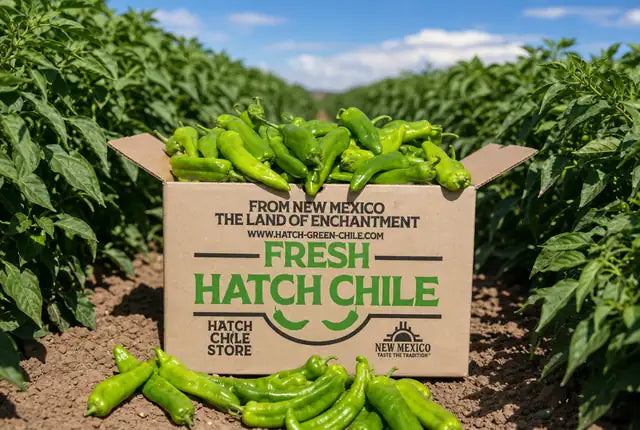
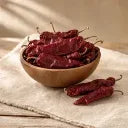
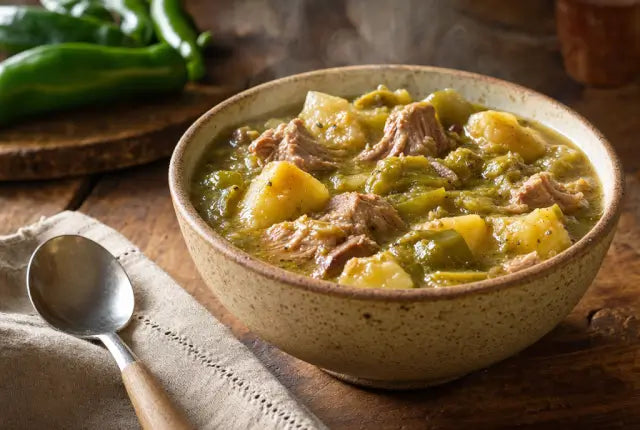
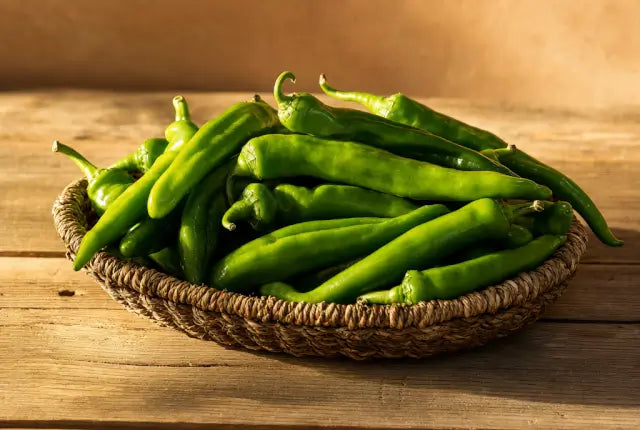
In New Mexican culture and cuisine, chile isn't just another variety of pepper—it's the pepper. It's so central to our identity that the word itself carries all the meaning we need. When a New Mexican says "chile," everyone knows exactly what they're talking about: the long green pods we roast in late summer, the red ristras hanging from porches, the sauce smothered over enchiladas when you answer "Christmas."
Adding "pepper" to the end is redundant—like saying "pizza pie" or "ATM machine." Chile is the pepper.
- "I need to pick up some green chile"
- "This chile is from Hatch"
- "The red chile this year is incredible"
- "How much chile should I order?"
- "Let's get some chile roasted"
- "I need to pick up some green chile peppers"
- "These hatch chili peppers are great"
- "Where can I buy hatch peppers?"
- "Are these New Mexico chili peppers?"
- "Do you sell green chilli peppers?"
When "Pepper" Does Appear
There are a few contexts where you might hear "pepper" in New Mexico:
- Scientific/botanical contexts: The Chile Pepper Institute at NMSU uses "pepper" in formal research because "chile" is technically a common name, not a botanical term. But even they use "chile" in most communications.
- Distinguishing from other peppers: If someone is comparing chile to bell peppers, jalapeños, or other varieties, they might say "chile peppers" for clarity.
- Marketing to outside audiences: Some businesses add "peppers" to product names because they know customers from other states search for that term.
If you see a product labeled "Hatch Chili Peppers" or "Green Chilli Peppers from Hatch," it's a signal that the producer may not have strong ties to the actual Hatch Valley community. Authentic New Mexico producers almost universally use "chile" without "pepper"—it's a subtle but telling indicator of genuine connection to the industry.
Industry Terminology: What Farmers & Producers Actually Say
After five generations in the chile business, I've learned that the terminology we use in the fields and processing facilities differs from what you'll see on consumer packaging. Here's a glossary of terms you'll hear around our farms and throughout the Hatch Valley:
What the Industry Never Says
Spend time around chile farmers, processors, and longtime New Mexicans, and you'll notice certain terms are conspicuously absent:
- "Hatch peppers" — Hatch chile, yes. Hatch peppers, never.
- "Green chili peppers" — Just "green chile" or just "chile."
- "Hatch chili pepper" — This triple-wrong construction (chili with I, plus "pepper") doesn't exist in local vocabulary.
- "Chiles" (with an S) — While grammatically correct as a plural, locals often use "chile" for both singular and plural. "I bought a lot of chile" not "I bought a lot of chiles."
- "Hot peppers" — Too generic. What kind? Chile? Jalapeño? Serrano? We specify.
Common Terminology Mistakes to Avoid
Whether you're writing about Hatch Chile, ordering in a New Mexico restaurant, or just trying to sound like you know what you're talking about, here are the most common terminology mistakes and how to fix them:
Quick Reference: Terminology by Context
| Context | Local/Industry Term | Common Outsider Term |
|---|---|---|
| Buying fresh product | "I'll take 10 pounds of green chile" | "10 pounds of green chili peppers" |
| At a restaurant | "Green chile on the side, please" | "Green pepper sauce on the side" |
| Describing heat level | "This is hot chile" | "These are hot hatch peppers" |
| Discussing varieties | "We grow Big Jim and Sandia" | "We grow different types of Hatch chili" |
| Ordering both colors | "Christmas, please" | "Red and green chili together" |
| Describing the product | "Roasted Hatch Chile" | "Roasted Hatch chili peppers" |
Complete Hatch Chile Glossary
From the fields to the table, here's every term you need to speak about Hatch Chile like a New Mexican:
Frequently Asked Questions
Got questions about Hatch Chile terminology? Here are the answers to the most common questions we hear:
Is it spelled chile, chili, or chilli?
In New Mexico and throughout the Southwest, the correct spelling is "chile" (with an E) when referring to the pepper plant or fruit. "Chili" (with an I) refers to the meat dish (chili con carne), while "chilli" is the British/Commonwealth spelling.
Senator Pete Domenici famously defended the "chile" spelling in a 1983 Congressional Record statement — a celebrated declaration of New Mexican usage, though a statement, not a law.
Why don't New Mexicans say "pepper" when talking about Hatch chile?
In New Mexican culture, chile is so central to our identity that the word stands alone without "pepper." Adding "pepper" is redundant—like saying "ATM machine."
Products labeled "Hatch chili peppers" often indicate the producer lacks authentic ties to the Hatch Valley community.
Is Hatch chile a variety or a location?
What is the difference between Hatch chile and Anaheim peppers?
While Anaheim chiles share genetic ancestry with New Mexico Chile, they differ significantly. Hatch Chile is grown in the unique terroir of the Hatch Valley—specific soil, water from the Rio Grande, and high desert climate create its distinctive flavor.
Anaheim peppers were bred in California for milder heat and thinner walls, making them less flavorful than authentic Hatch Chile.
What does "Christmas" mean when ordering chile in New Mexico?
"Christmas" is the New Mexican term for ordering both red AND green chile together on the same dish. It's called Christmas because the combination resembles holiday colors.
What are the most common Hatch Chile varieties?
How do you pronounce "chile" correctly?
The traditional Spanish pronunciation is "CHEE-leh" (two syllables). The anglicized "CHILL-ee" is also common. Either is acceptable—what matters more is the spelling and avoiding "pepper."
What is a ristra?
A ristra (pronounced "REE-strah") is a string of dried red chile pods, traditionally hung from porches in New Mexican architecture. Our ristras are handmade in Hatch.
Where can I buy authentic Hatch chile online?
Look for sellers who use the correct "chile" spelling, specify actual varieties (Big Jim, Sandia, etc.), and have verifiable connections to New Mexico farming.
Hatch Chile Store ships fresh, roasted, and frozen chile nationwide, directly from our 5th-generation family farm.
When is Hatch chile season?
Hatch Chile season runs from late July through early October, with peak harvest in August-September. Roasted and frozen chile is available year-round.
Ready to Taste Authentic Hatch Chile?
Now that you know the language, experience the real thing. Our family has been growing chile in the Hatch Valley for five generations.