





5th Generation Hatch Valley Family
What is Hatch Chile?
The definitive guide from the descendants of Joseph Franzoy, the first commercial chile farmer in Hatch Valley. Our family has grown chile here for over 100 years.
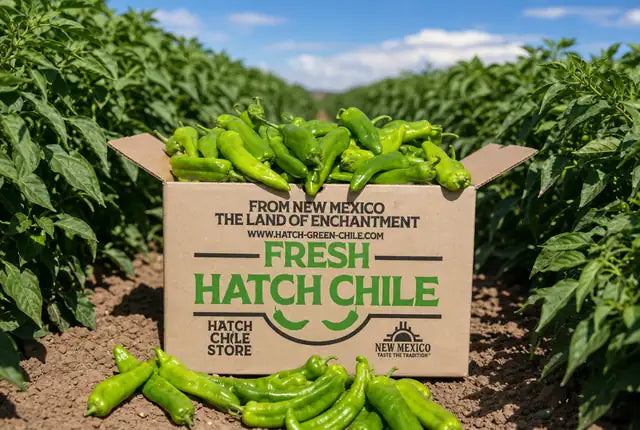
Learn the Full Story ↓Hatch Chile isn't just a pepper, it's a protected regional designation for chile peppers grown exclusively in the Hatch Valley of southern New Mexico.
Like Vidalia onions from Georgia, Napa Valley wines from California, or Champagne from France, true Hatch Chile can only come from one place on Earth: a 40-mile stretch of the Rio Grande Valley where our family has been farming for five generations.
We're the Mitchell family of The Hatch Chile Store, descendants of Joseph Franzoy—an immigrant from Sporminore in the Austro-Hungarian Tyrol (now Trentino, Italy) who became the first commercial chile farmer in Hatch Valley over 100 years ago.
Order Hatch chile
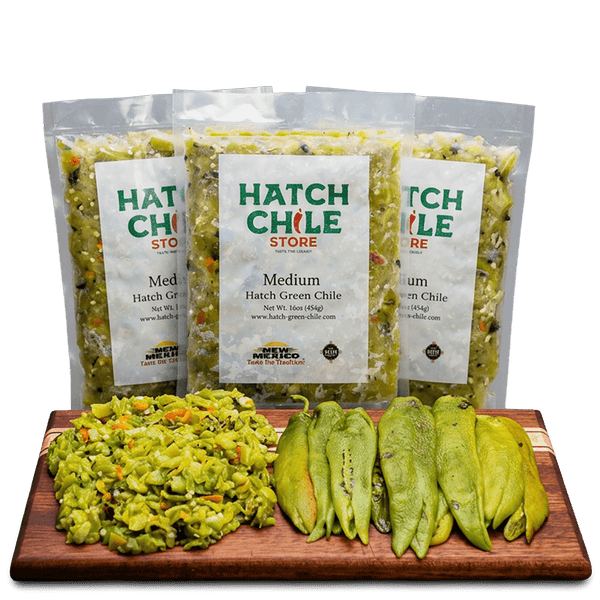
Flame-roasted, partially peeled and frozen, or fresh from the field during harvest.
In This Guide
Quick answers
What’s so special about Hatch green chile?
Hatch green chile is a place, not a variety. Any New Mexican chile grown in the Hatch Valley — a roughly 40-mile stretch of Rio Grande bottomland in southern New Mexico — qualifies. The valley’s alkaline soil, 4,000-foot elevation, intense sun and wide day-to-night temperature swings give the same cultivars a flavor they do not develop anywhere else.
What is the difference between green chile and Hatch green chile?
Green chile is chile picked while it is still green, anywhere it grows. Hatch green chile is the same New Mexican pod grown in the Hatch Valley specifically. The cultivar sets the heat — Big Jim, Sandia, Joe Parker, Lumbre — and the valley sets the flavor, which is why “Hatch” names an origin rather than a pepper.
What does Hatch green chile taste like?
Earthy, smoky and slightly sweet, with a clean heat that lingers instead of overwhelming. Roasting brings it out — blistering the skin over open flame adds the smokiness people associate with New Mexican cooking. Thick-walled Big Jim is meaty with Medium heat; Sandia Select carries more pronounced heat over the same earthy base.
Hotter than a jalapeño? See the jalapeño answer below. Mixing Hatch up with the pepper it is most often confused for? Read Hatch chile vs Anaheim pepper: heat, flavor and how to tell them apart.
What Exactly is Hatch Chile?
A geographic designation, not a single variety.
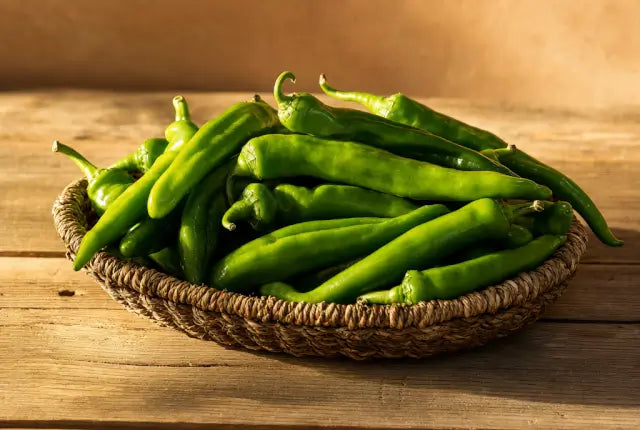
Hatch Chile refers to any long green New Mexican chile pepper (Capsicum annuum) commercially grown within the Hatch Valley of southern New Mexico. The valley extends along the Rio Grande River from Arrey, New Mexico, south past the village of Hatch to Tonuco Mountain—approximately 40 miles of some of the most fertile chile-growing land on Earth.
Several distinct cultivars qualify as "Hatch Chile" when grown in this region, including Big Jim, Sandia, Joe Parker, Lumbre, Barker, NuMex 6-4, and others developed in partnership with New Mexico State University's Chile Pepper Institute.
"There is no such thing as a Hatch chile variety, despite all the hype about them. The Hatch chile has a family farm image that can be traced back to the Franzoy family, Austrian immigrants who arrived in the Hatch Valley about 100 years ago."
Dave DeWitt, Chile Historian and Author of The Complete Chile Pepper BookThat family farm image he references? That's our family. The Franzoys emigrated from Sporminore in the Tyrol region—Austro-Hungarian territory when they left, part of Trentino, Italy today. Joseph Franzoy, our great-great-grandfather, was the first farmer in the valley to grow chile commercially and transport it to buyers outside the region.
What Does Hatch Chile Taste Like?
Hatch Chile has a distinctive flavor profile that sets it apart from other peppers: earthy, smoky, and slightly sweet with a complex depth that intensifies when roasted. The flavor is often described as having notes of roasted nuts, subtle fruitiness, and a clean, lingering heat that doesn't overwhelm the palate.
The taste varies by variety—Big Jim tends toward medium and meaty, while Sandia Select delivers more pronounced heat with earthy undertones. When properly roasted, all varieties develop a signature smokiness that's become synonymous with authentic New Mexican cuisine.
Key Characteristics of Hatch Chile
Growing Region
Exclusively Hatch Valley, NM (~4,000 ft elevation)
Heat Range
~900–12,000+ Scoville Heat Units
Harvest Season
Late July into October (peak Aug–Sept)
Flavor Profile
Earthy, smoky, slightly sweet with complex depth
Why Hatch Chile Can Only Come from Here
The science of terroir explains the magic.
Just as Champagne grapes grown in California can't legally be called Champagne, chile peppers grown outside Hatch Valley cannot legally be labeled as Hatch Chile in New Mexico. Hatch chile is the most celebrated New Mexico chile of all — the benchmark every other New Mexico green chile is measured against.
🏔️ Mineral-Rich Soil
Alluvial deposits from the Rio Grande contain selenium and minerals that influence flavor. NMSU research shows 23% higher pyrazine concentration than chile grown elsewhere.
☀️ 300+ Days of Sunshine
Intense UV exposure during the growing season intensifies flavor development and boosts antioxidant levels.
🌡️ Temperature Swings
Hot days (100°F+) followed by cool mountain nights (60s) stress plants to concentrate sugars and capsaicinoids.
💧 Rio Grande Irrigation
Water from Elephant Butte Irrigation District delivers unique mineral composition for precision cultivation.
We often explain Hatch Chile like Napa Valley wine or Vidalia onions. You can plant the exact same seeds in Arizona, California, or Mexico—but you won't get Hatch Chile. The terroir simply cannot be replicated.
New Mexico law prohibits false labeling. The Hatch Chile Association, of which our founder Preston Mitchell is a board member, has secured federal certification mark protection. If you see "Hatch Chile" with "Product of Mexico" on the label, it's counterfeit.
Our Family's Story: How Hatch Chile Began
Five generations of Hatch Valley heritage.
In 1917, Joseph and Celestina Franzoy—immigrants from Sporminore in the Austro-Hungarian Tyrol who had spent 12 years working in American mines—finally achieved their dream of owning a farm. They settled on 60 acres of wild land in tiny Salem, New Mexico, as documented in New Mexico Magazine.
That first summer, they lived in a tent with seven children while Joseph cleared brush and marshland with his bare hands—legend has it he scolded his sons for being "lazy" when they used horses to pull stumps.
The First Commercial Chile Farmer
When Joseph first tasted chile pepper, family legend says he thought he was being poisoned. But he grew to love it—and he saw an opportunity no one else had recognized. At the time, families throughout New Mexico grew chile for personal consumption, but nobody cultivated, transported, and marketed it commercially outside the valley.
Joseph changed that. He became the first farmer in Hatch Valley to grow chile for sale and deliver it directly to buyers—making 16-hour door-to-door market trips over dirt roads.
Joseph Franzoy settles in Salem, NM with wife Celestina and 7 children. Begins farming cotton and wheat.
First commercial chile farming begins. Joseph grows, transports, and sells chile outside the valley.
First Hatch Chile Festival. Franzoy farmers help inaugurate the celebration. 1,500 attend; today it draws 30,000+.
Big Jim pepper released. Developed by Jim Lytle (married to Joseph's daughter June) with NMSU. Sets a Guinness World Record at 17 inches.
Preston Mitchell, age 12, launches the Berridge Farms website—one of the first online farm-to-table chile businesses.
The Hatch Chile Store founded. Preston and Elaine Mitchell merge operations. Now the #1 online source for authentic Hatch chile.
"The Internet took the place of Great-Grandpa driving with his cart and mule, personally going to each mom-and-pop store and individual homes peddling his wares."
Barbara Mitchell, Preston's mother and Joseph Franzoy's great-granddaughterHatch Chile vs. Other Peppers
How does Hatch compare to jalapeños, poblanos, and serranos?
Are Hatch green chiles hotter than jalapeños?
It depends on the variety. Most grocery-store jalapeños run 2,500–8,000 SHU. Our Mild Hatch varieties sit below that — Joe Parker is about 900 SHU — while our Medium (2,000–7,000 SHU; the Big Jim variety measures about 6,500) lands mid-range, Hot Sandia Select runs about 9,500 SHU, and X-Hot Lumbre passes 12,000 SHU and varies year to year. Those figures follow NMSU CR706. Hatch spans both sides of the jalapeño.
If you're familiar with other chile peppers, you might wonder where Hatch fits in. The short answer: Hatch Chile occupies a unique middle ground—more flavorful than most mild peppers, more complex than most hot ones, and with a roasted character that no other chile can match.
| Chile Type | Heat (SHU) | Flavor | Best Uses |
|---|---|---|---|
| Hatch Chile | ~900–12,000+ | Earthy, smoky, complex | Roasting, stuffing, sauces, everything |
| Jalapeño | 2,500–8,000 | Grassy, bright, sharp | Nachos, poppers, pickling |
| Poblano | 1,000–2,000 | Mild, earthy, sweet | Stuffing, rajas, mole |
| Serrano | 10,000–23,000 | Bright, crisp, very hot | Salsas, pico de gallo |
| Anaheim | 500–2,500 | Mild, vegetal, tangy | Stuffing, casseroles |
| Cayenne | 30,000–50,000 | Sharp, peppery heat | Hot sauce, seasoning |
See the full pepper-by-pepper comparison: Hatch vs. Anaheim & 9 other chiles →
Can You Substitute Hatch Chile in Recipes?
Yes—Hatch Chile can replace poblanos, Anaheims, or jalapeños in most recipes. Just keep in mind that Hatch's roasted, earthy depth is what makes green chile stew and enchiladas taste authentically New Mexican. If a recipe specifically calls for Hatch chile, substituting another pepper will noticeably change the dish.
Hatch Chile vs. Anaheim
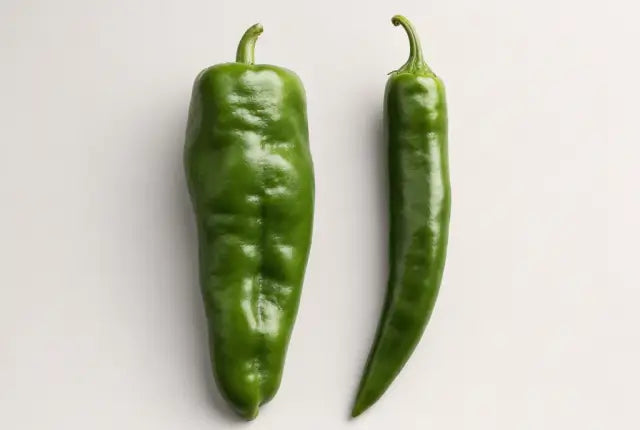
They look similar—but they're not the same pepper.
Hatch and Anaheim share a common ancestor—Emilio Ortega carried New Mexican chile seeds to Anaheim, California in the early 1900s—but they are not the same. Without the Hatch Valley's terroir, the California-grown Anaheim pepper became milder (500–2,500 SHU vs. Hatch's ~900–12,000+ SHU across cultivars per NMSU CR706) and lost the smoky, earthy depth that defines authentic Hatch chile.
Read the full Hatch vs. Anaheim comparison →
See the side-by-side heat, flavor, and origin breakdown—plus how Hatch stacks up against poblano, jalapeño, serrano, and 7 other peppers.
Hatch Chile Varieties & Heat Levels
Multiple cultivars, one legendary terroir.
"Hatch Chile" encompasses numerous cultivars developed over 100+ years of breeding at New Mexico State University—often in partnership with local farming families like ours. For a complete breakdown, see our detailed heat level guide.
| Heat Level | Scoville (SHU) | Varieties | Best For |
|---|---|---|---|
| MILD | 0–2,000 | 1904, Joe Parker, Machete, NuMex 6-4 | Chile newcomers, kids, rellenos |
| MEDIUM | 2,000–7,000 | Big Jim or Charger | Enchiladas, stuffing, everyday cooking |
| HOT | 7,000–11,000 | Sandia Select | Green chile stew, sauces, true NM flavor |
| X-HOT | 11,000+ | Lumbre, Miss June (Barker occasionally) | Heat seekers, hot sauce, spice lovers |
Our Medium may be Big Jim or Charger, the variety that is replacing Big Jim. Fresh green Medium boxes in 2026 were a mix of the two until Big Jim finished in late September, and Charger after that. Frozen Medium roasted chile and our rellenos may be either variety.
Featured Varieties
Big Jim
The most famous Hatch variety, named after our relative Jim Lytle. Holds the Guinness World Record for longest chile (17 inches). Thick, meaty walls perfect for chile rellenos. One of our two Medium varieties, with Charger.
Sandia Select
Our "Hot" variety and the backbone of authentic New Mexican restaurant cooking. Dependable heat with earthy undertones. Named for the Spanish word sandía, meaning watermelon—the pepper's red-green coloring resembles the fruit.
Lumbre
Developed by Jimmy and Faron Lytle—our extended family. The hottest variety commonly grown in the valley. "Lumbre" means "fire" in Spanish, and it earns the name. For serious heat seekers only.
Capsaicin is concentrated in the white veins (placenta) inside the pod, not the seeds. To reduce heat, remove the veins, not just the seeds. The seeds only taste hot because they touch the veins. Learn proper technique in our roasting and preparation guide.
Nutrition & Health Benefits
Is Hatch chile good for you? Absolutely.
Beyond incredible flavor, Hatch Chile delivers impressive nutritional benefits. New Mexicans have known this for generations—now science confirms what our grandmothers always said.
More Vitamin C Than Oranges
One green chile pod contains 2x the vitamin C of a medium orange.
Low Calorie
About 40 calories per 100g. Add flavor without adding weight.
Per 100g of raw green Hatch Chile: ~40 calories, 9g carbohydrates, 2g protein, 0.4g fat, 1.5g fiber. Rich in vitamins A, C, B6, and K, plus potassium and manganese.
The intense New Mexico sun that gives Hatch Chile its flavor also concentrates antioxidants—research from NMSU shows Hatch-grown peppers have higher antioxidant levels than the same varieties grown elsewhere.
How to Identify Authentic Hatch Chile
Not everything labeled "Hatch" is real.
A 2023 survey found that 68% of restaurant buyers had unknowingly purchased counterfeit "Hatch" chile. Mislabeling is rampant—especially online and in grocery stores outside New Mexico. Here's how to ensure you're getting the real thing.
✅ What to Look For
- Hatch Chile Association certification logo
- Clear origin statement: "Grown in Hatch Valley, NM"
- Seasonal fresh availability (late July into October only)
- New Mexico-based seller (area code 575)
- Traceable farm sourcing
❌ Red Flags
- "Hatch-Style" or "Hatch-Type" = NOT from Hatch
- "Product of Mexico" or "Product of Arizona"
- Year-round "fresh" availability (impossible)
- Vague origin or no farm information
Hatch Chile Season: When to Buy
Late July into October. Peak: August–September.
The annual Hatch Chile Festival—held Labor Day weekend—marks the peak of the season. It's when our family and other Hatch Valley farmers celebrate the harvest with 30,000+ visitors from around the world.
Year-Round Options
Can't wait for fresh season? We've got you covered:
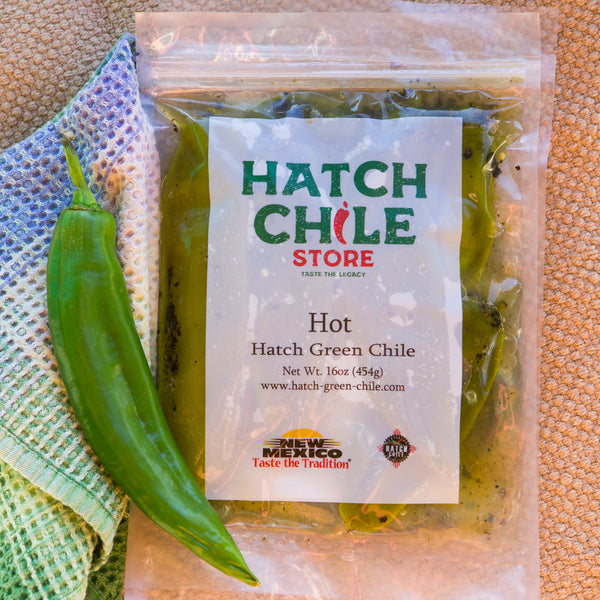
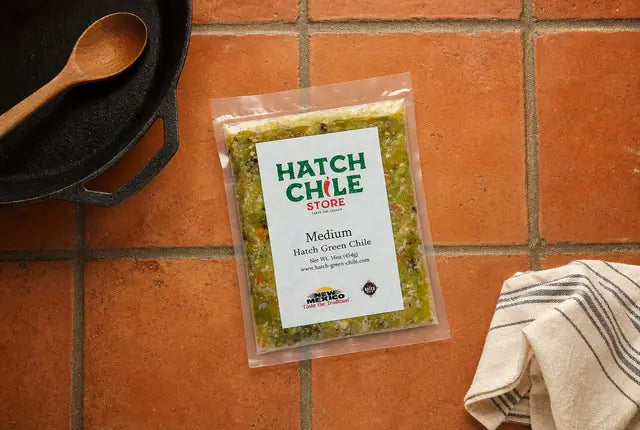
- Frozen Roasted Chile: Flash-frozen within hours of roasting—how most New Mexicans stockpile their annual supply. Tastes just like fresh-roasted.
- Dried Chile & Powders: Ristras, pods, flakes, or powder retain distinctive flavor for 12+ months.
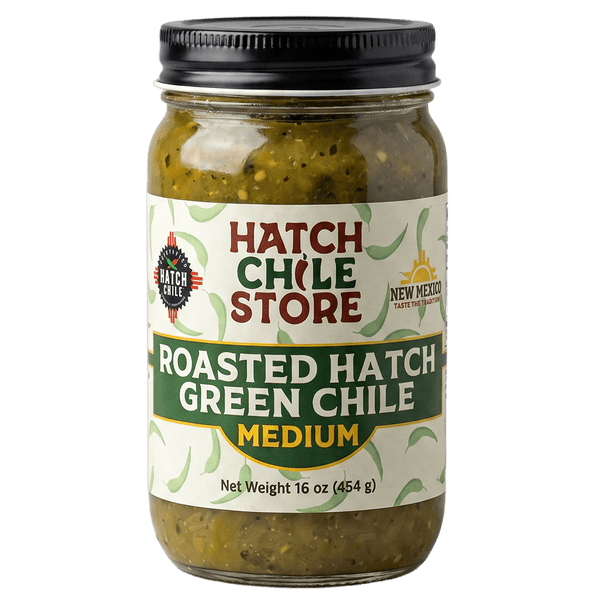
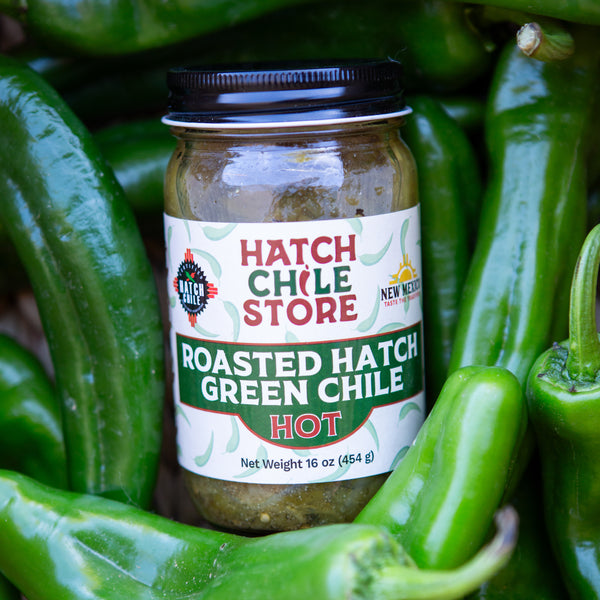
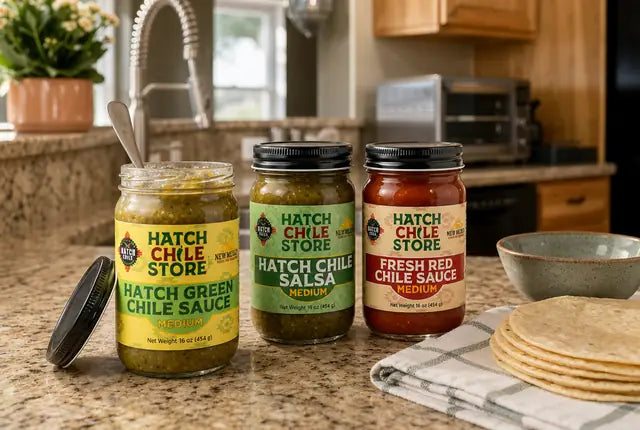
- Jarred Salsas & Sauces: Shelf-stable authentic Hatch flavor whenever you need it.
How to Store Hatch Chile
Fresh, frozen, or dried—maximize shelf life.
🥬 Fresh (Unroasted)
- Refrigerator: 4–7 days in crisper drawer
- Tip: Store in paper bag, not plastic (prevents moisture)
- Best practice: Roast within a week of receiving
❄️ Frozen (Roasted)
- Freezer: 2 years at 0°F
- Tip: Portion into meal-sized bags before freezing
- Thawing: In the fridge overnight, or in cold water with the bag sealed (cook it right away if thawed in water)
🌶️ Dried (Pods/Powder)
- Pantry: 12–18 months in airtight container
- Tip: Store away from heat, light, and moisture
- Ristras: Decorative for years; culinary use within 1 year
For detailed instructions on roasting, peeling, and freezing fresh chile, see our comprehensive How to Roast Hatch Chile guide.
How to Use Hatch Chile
From classic New Mexican dishes to everyday cooking.
Once you have roasted, peeled Hatch Chile (see our complete roasting guide), the possibilities are endless. Here are the classic applications and some creative ideas.
Classic New Mexican Dishes
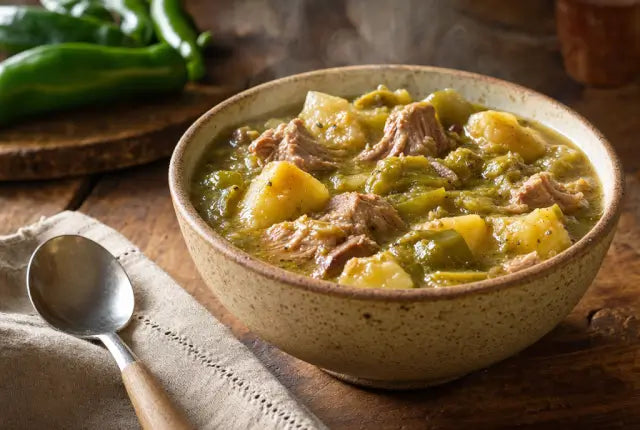
- Green Chile Stew: The quintessential New Mexican comfort food—pork, potatoes, and green chile simmered to perfection.
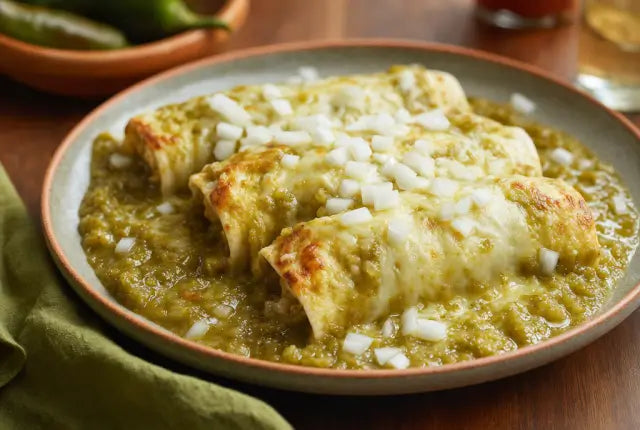
- Green Chile Enchiladas: Smothered in green chile sauce and melted cheese. Order them "Christmas style" for both red and green — try our Christmas enchiladas recipe to make the combination at home.
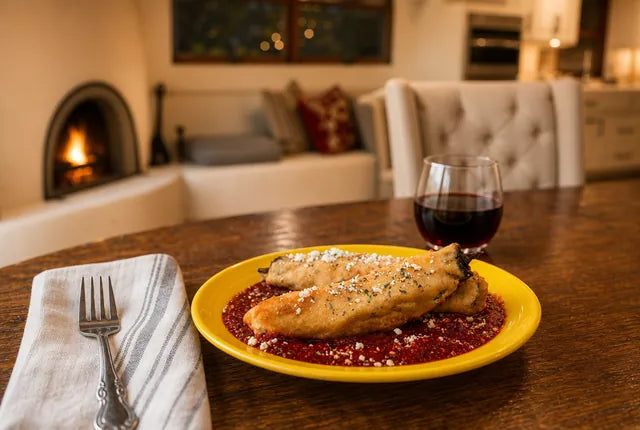
- Chile Rellenos: Whole roasted chiles stuffed with cheese, battered, and fried. Big Jim is the classic choice.
- Green Chile Cheeseburger: The burger that launched a thousand road trips.
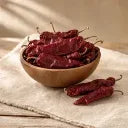
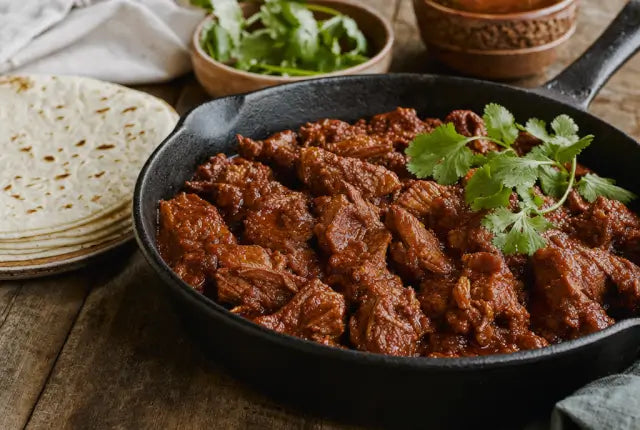
- Red Chile Sauce: Made from dried red Hatch Chile pods. The soul of carne adovada and huevos rancheros. Learn more about the New Mexico red chile tradition, or shop Hatch red chile.
In 1996, New Mexico designated "Red or Green?" as the official state question—asked at every restaurant when you order. Your answer determines which chile sauce tops your dish. Can't decide? Say "Christmas" to get both. Learn more about the tradition.
Everyday Ideas
Beyond traditional dishes, Hatch Chile elevates virtually anything: scrambled eggs and breakfast burritos, burgers and sandwiches, pizza and pasta, queso dip and guacamole, soups and chili, even cornbread and chocolate desserts.
Browse our full recipe collection for dozens of ideas.
Buying Guide: How Much to Order
Plan your annual Hatch Chile supply like a New Mexican.
True Hatch Chile lovers buy in bulk during harvest season and freeze enough to last until next year. Here's how to estimate your needs:
| Usage Level | Fresh Chile/Year | After Roasting | Best For |
|---|---|---|---|
| Light User | 5–10 lbs | ~3–6 lbs | Occasional use, first time |
| Regular User | 20–30 lbs | ~12–18 lbs | Weekly cooking, family of 2–4 |
| Chile Lover | 40–60 lbs | ~24–36 lbs | Multiple meals/week |
| New Mexican | 100+ lbs | ~60+ lbs | Daily use, sharing |
Note: Fresh chile loses about half its weight during roasting and peeling. So 10 lbs of fresh chile yields roughly 5 lbs of roasted, peeled chile.
Frequently Asked Questions
Quick answers to common questions about Hatch Chile.
What makes Hatch Chile different from regular green chile?
Hatch Chile is a geographic designation—like Champagne or Vidalia onions—for chile peppers grown exclusively in New Mexico's Hatch Valley. The region's unique terroir creates a distinctively earthy, complex, smoky-sweet flavor that can't be replicated elsewhere.
How spicy is Hatch chile?
Hatch Chile ranges from Mild (~900 SHU; Joe Parker, NuMex 6-4) to X-Hot (12,000+ SHU; Lumbre) depending on variety, per NMSU CR706. Mild varieties like NuMex 6-4 sit below most jalapeños; hot varieties like Sandia Select have noticeable heat; Lumbre packs serious punch. Most find Medium offers the best balance.
How long does Hatch Chile last in the freezer?
Properly stored roasted Hatch Chile has a 2-year shelf life in the freezer at 0°F without significant quality loss. This is how most New Mexicans preserve their annual supply. Portion into meal-sized bags and remove as much air as possible.
Can you eat Hatch chile raw?
Yes, it's safe but not recommended. Raw green chile has tough skin and sharp, grassy flavor. Roasting transforms it—charring the skin for easy peeling while developing the signature smoky sweetness. See our roasting guide.
What's the difference between green and red Hatch chile?
Same plant, different harvest timing. Green chile is picked while immature with bright, fresh heat. Red chile ripens fully on the vine, developing sweeter, earthier flavor. Green is typically roasted fresh; red is usually dried for sauces and powder.
Is Hatch chile good for you?
Yes! One green chile pod contains more vitamin C than an orange, plus vitamins A, B6, and K. Chile is also low in calories (about 40 per 100g).
Why is my Hatch chile not hot?
Factors affecting heat: variety (mild varieties have minimal heat by design), growing conditions, and pod variation. For more heat, try Sandia Select (Hot), or during harvest our X-Hot (Lumbre and Miss June). Heat is concentrated in white veins inside the pod—leaving them in increases spiciness.
How do you pronounce "Hatch chile"?
Hatch rhymes with "catch." Chile is "CHEE-lay" in New Mexico (Spanish origin)—not "CHIH-lee" like the bean dish. The pepper is always spelled "chile" (Spanish), not "chili" (Tex-Mex). Getting this right marks you as someone who knows their peppers!
Where can I buy authentic Hatch chile?
Year-round, order from Hatch Valley farms online. The Hatch Chile Store ships fresh, roasted, frozen, and dried chile nationwide from our 5th-generation family farm. Shop fresh, roasted, frozen, and jarred Hatch green chile direct from our farm.
What should I do with Hatch chile seeds?
Save and dry seeds for planting (though chile grown outside Hatch Valley won't be "Hatch chile"—terroir matters). Seeds are edible but don't contain significant heat (that's in the veins). Most people remove seeds during prep, but leaving them is fine.
Experience Authentic Hatch Chile
From our family's farm in New Mexico to your table. Five generations of Hatch Valley heritage in every bite.
Questions? Call (575) 267-2067 — that's a Hatch Valley area code, because that's where we live.
Want to taste it? Shop our Hatch chile salsas and sauces, made from real Hatch Valley chile.
About the Author
Preston Mitchell
Preston is the founder of The Hatch Chile Store and a 5th-generation Hatch Valley farmer. His great-great-grandfather Joseph Franzoy was the first commercial chile farmer in the valley. Preston serves on the board of the Hatch Chile Association and has been featured in New Mexico Magazine, Texas Monthly, and the Food Network.