What Is a Chile Ristra?
The word ristra (pronounced REE-strah) comes from the Spanish for "string" or "braid." In New Mexico, it almost always refers to a string of red chile peppers tied together and hung to dry. Ristras serve a dual purpose: they preserve the chile harvest for year-round cooking, and they make one of the most iconic decorations in the American Southwest.
Red chile is simply green chile that has been left on the plant an extra four to six weeks to ripen fully. That additional time on the vine concentrates sugars and develops the deep crimson color. Once harvested, the peppers are strung onto twine — traditionally three or four at a time — and hung in the dry New Mexico air, where they cure naturally over several weeks. As the pods dry, natural fermentation breaks down sugars into more complex flavor compounds, the same process that makes sun-dried tomatoes so much richer than fresh ones.
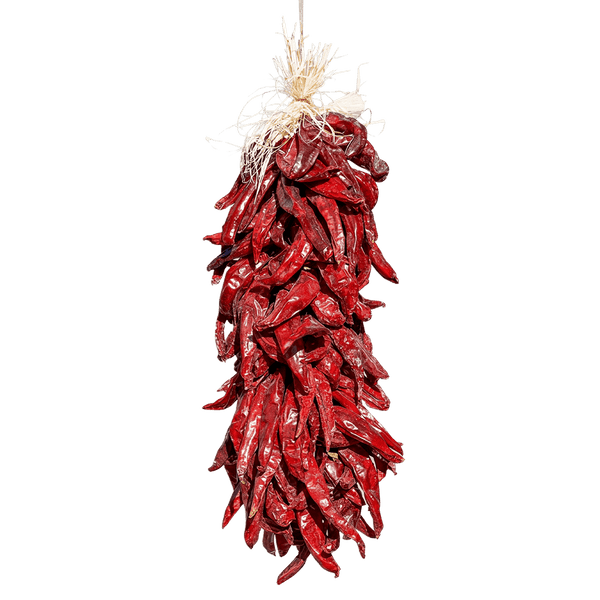
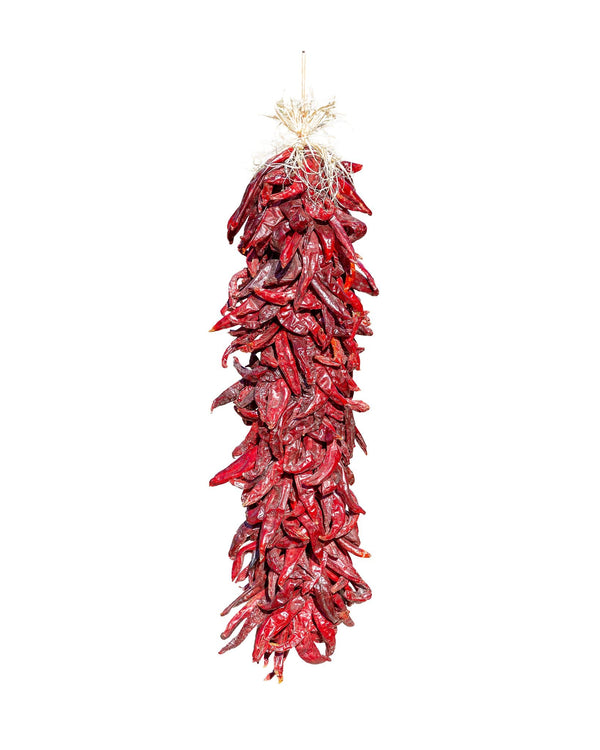
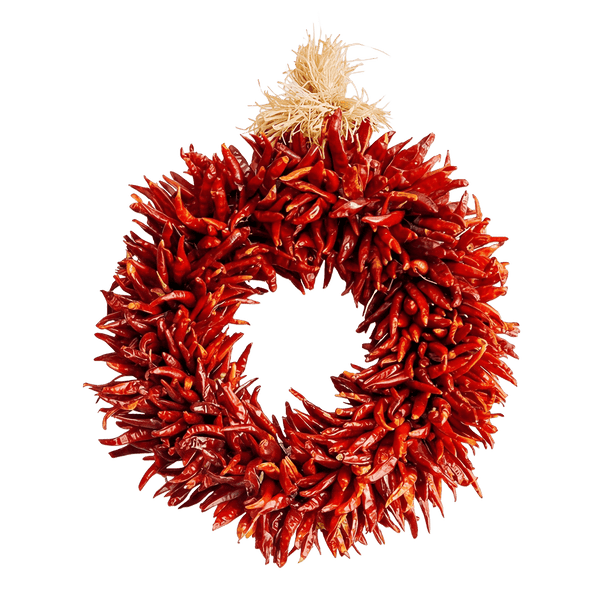
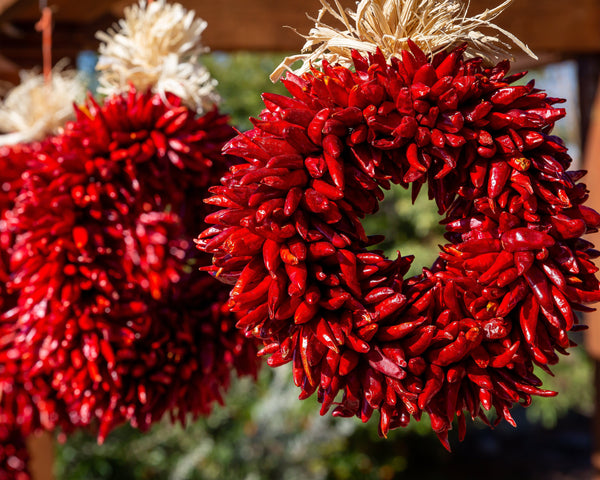
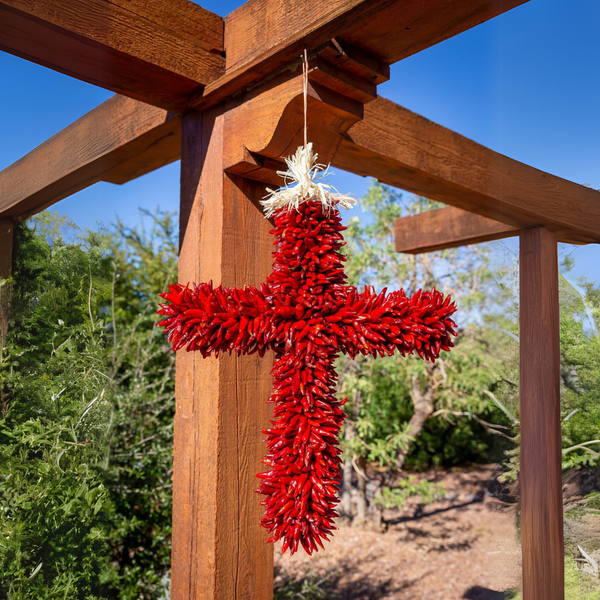
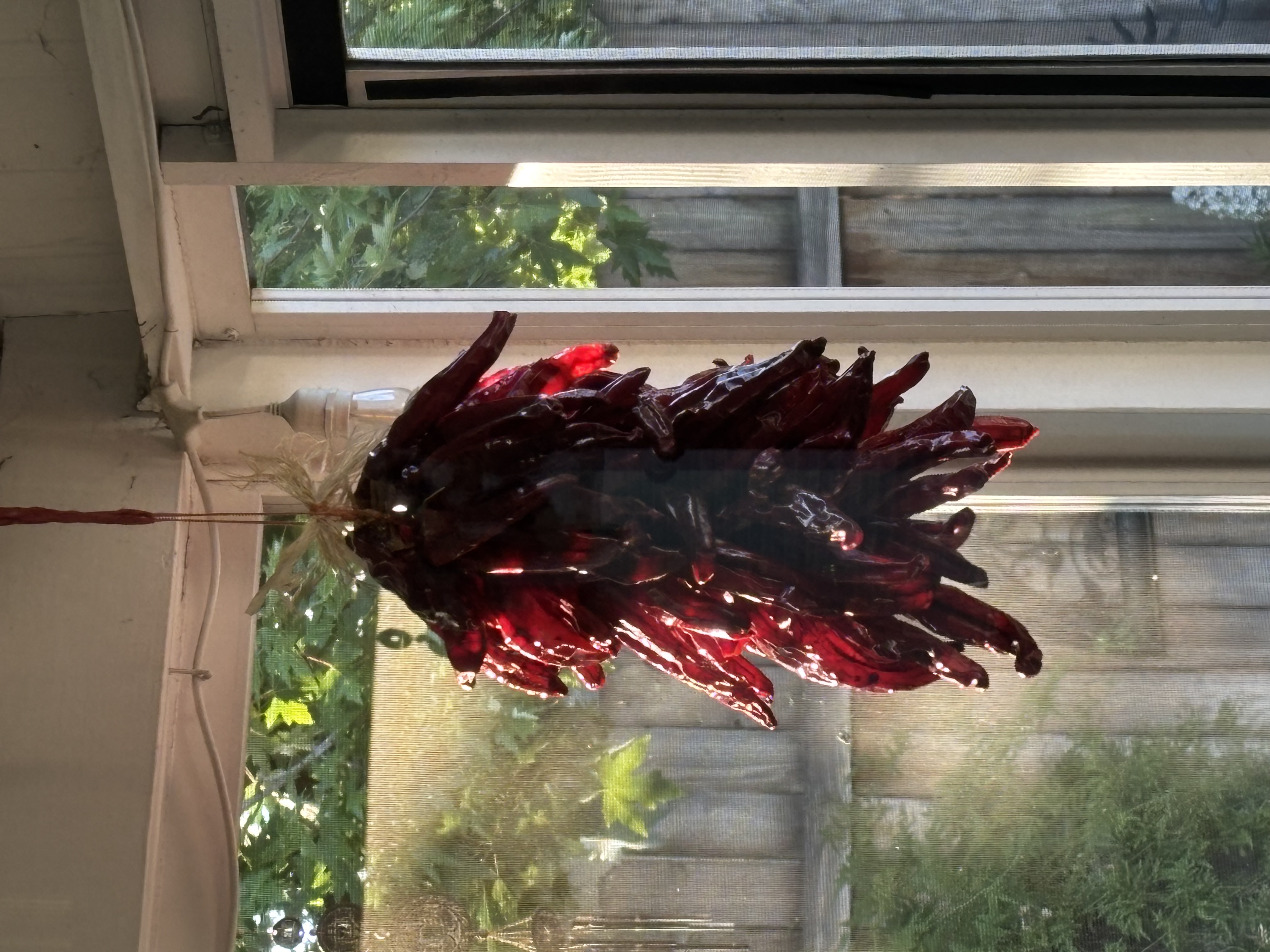
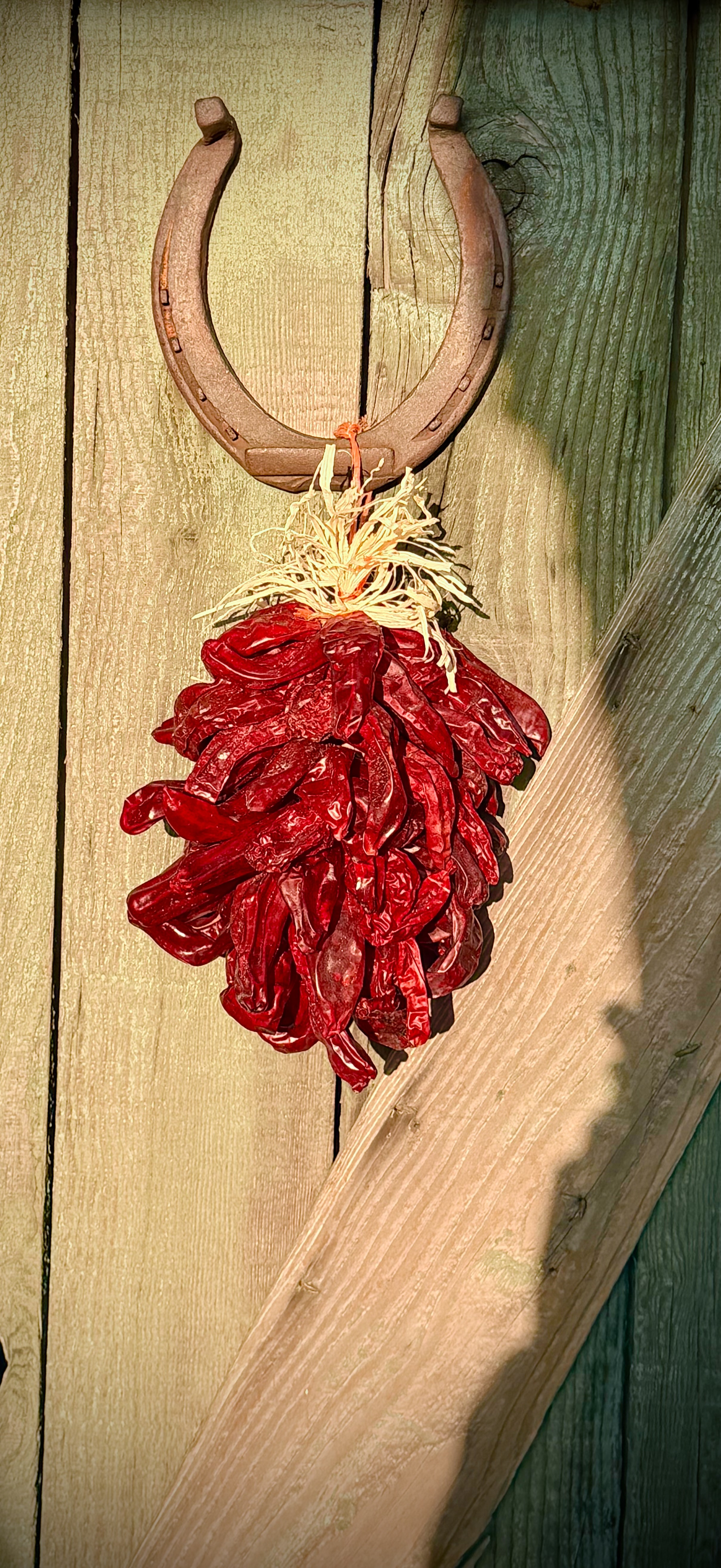
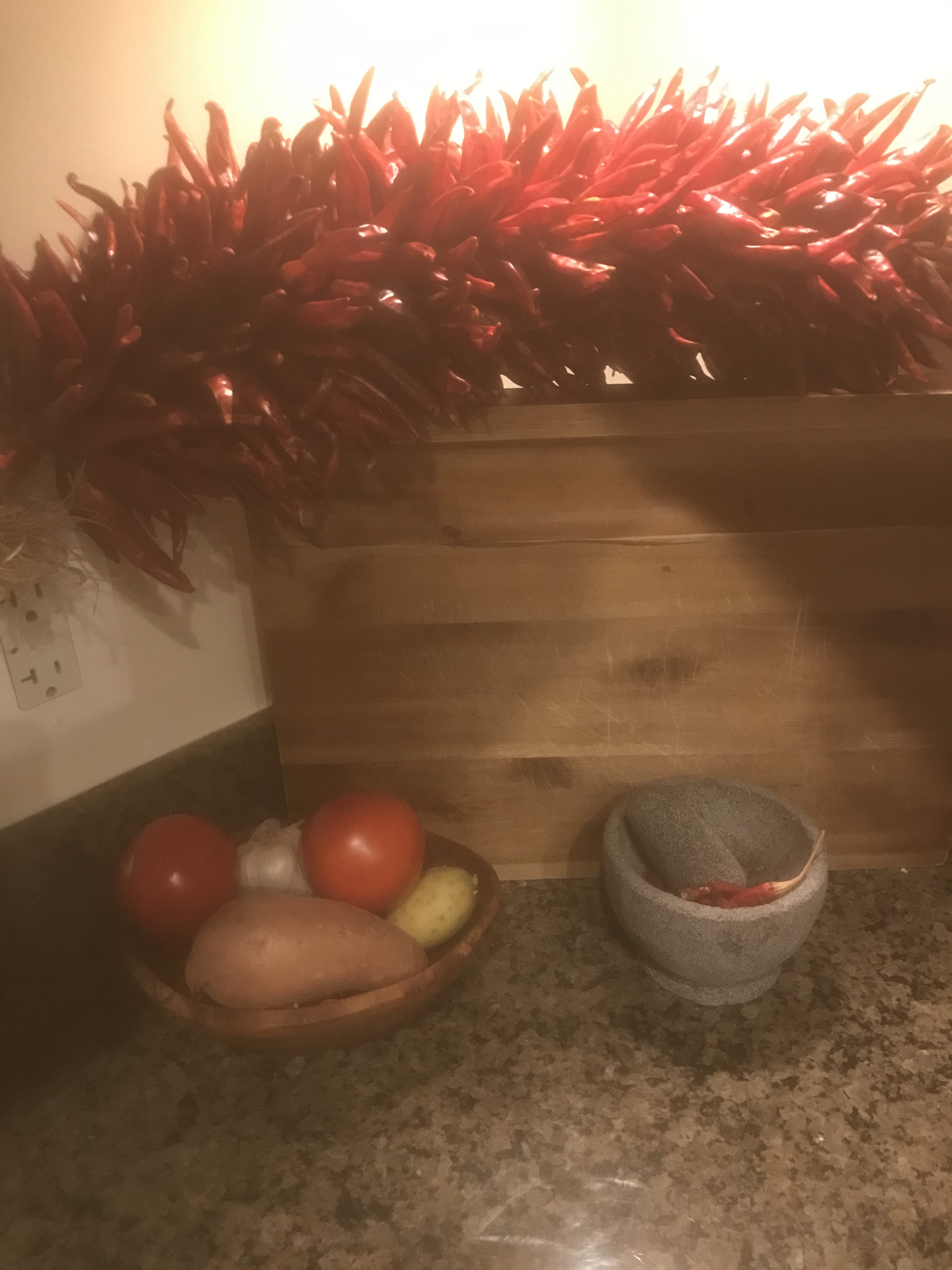
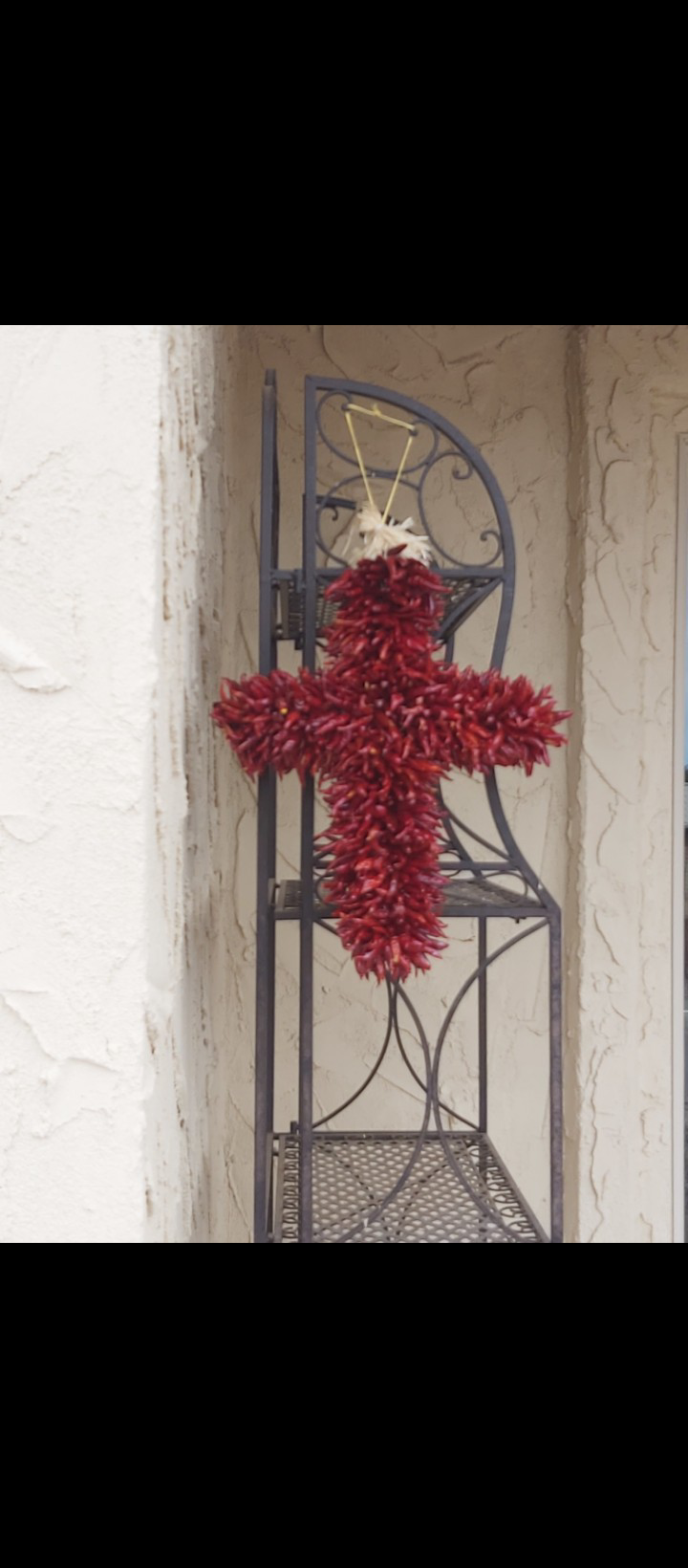
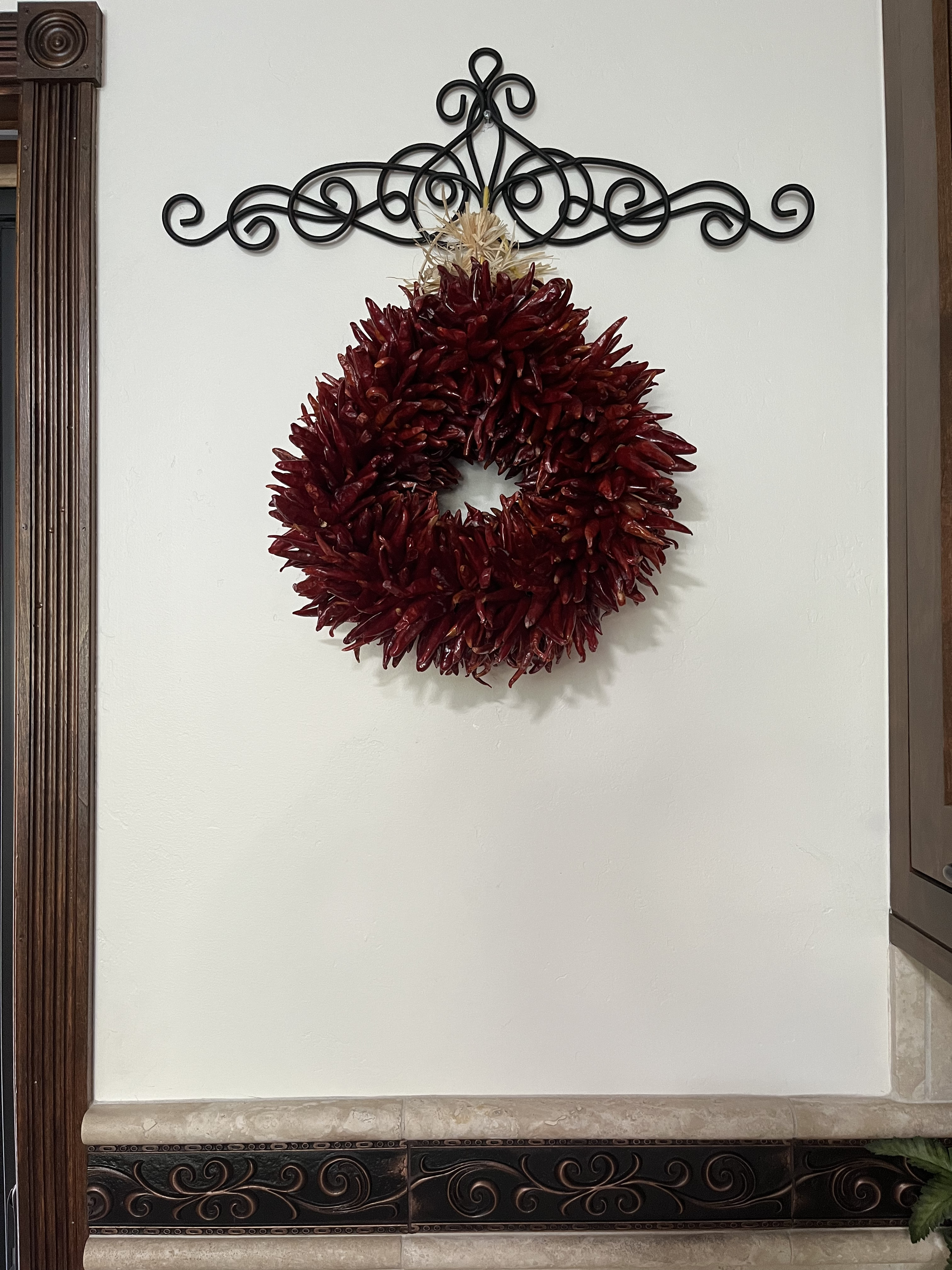
A well-made ristra is both functional food storage and folk art. The shape is instantly recognizable: a dense, tapered column of glossy red pods topped with shredded corn husks, finished with a twine loop for hanging. Ristras also come shaped into wreaths, crosses, hearts, and other forms, particularly when made from the smaller chile pequin (also known as chile de árbol).
History and Cultural Significance
The practice of drying foods by stringing them together predates Spanish colonization. Pueblo peoples along the Rio Grande sun-dried corn, berries, and meat on hanging racks as early as 1000 CE. When Spanish colonizers introduced chile peppers to New Mexico in the late 1500s — documented as early as Juan de Oñate's 1598 expedition — Pueblo farmers quickly adapted their indigenous drying techniques to the new crop. By the 1700s, the chile ristra as we know it had emerged: a practical hybrid of Pueblo food preservation and Spanish colonial agriculture.
The hanging method solved a critical problem. Chile drying on the ground attracted dirt, insects, and moisture. Birds posed an even bigger threat — they are immune to capsaicin and will devour chile seeds given the opportunity. Suspending the harvest on strings kept it clean, dry, and safe from wildlife, all while allowing air to circulate freely around every pod.
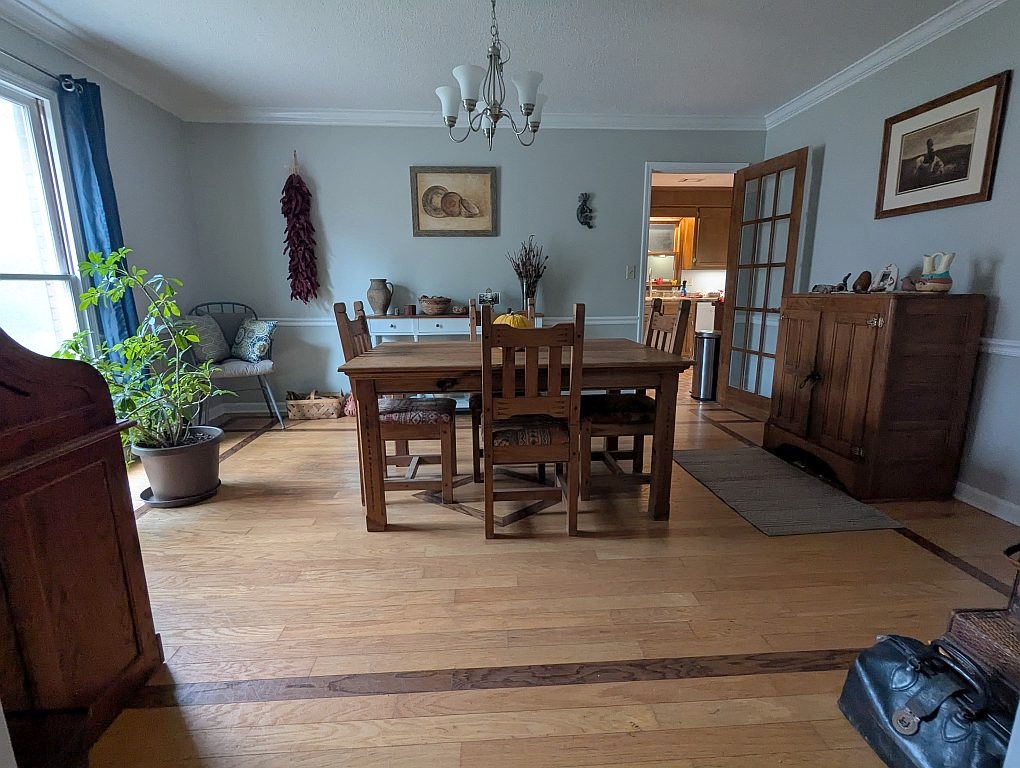
Over the centuries, ristras evolved from purely practical food storage into powerful cultural symbols. In New Mexican folklore, a ristra hung by the front door signals welcome, warmth, and hospitality. Many families believe ristras bring good health and good luck to the household — a tradition with roots in both Pueblo spiritual practices and Spanish colonial customs. Today you will find ristras hanging from portals, vigas, and entryways on adobe homes from Taos to Las Cruces, at restaurants advertising authentic New Mexican cuisine, and in shops and galleries throughout Santa Fe's historic districts.
The ristra is so woven into New Mexico's identity that it has become the single most recognizable symbol of the state after the Zia sun symbol. It appears on everything from tourism campaigns to official state publications, and every September the Hatch Chile Festival draws thousands of visitors who watch artisans tie fresh ristras in real time.
Our Chile Ristra Collection
We offer four product families, all hand-tied in Hatch from chile grown in the Valley. Every item ships with a corn-husk top and a hanging loop, ready to display the moment it arrives.
Traditional Hatch Chile Ristras (Sandia Variety)
Our flagship ristra uses Sandia red chile, the same hot variety that New Mexican cooks grind into red chile sauce. Sandia pods are large, meaty, and moderately hot — roughly 6,500 Scoville Heat Units — making them ideal for both cooking and display. These ristras come in six sizes from 6 inches to 3 feet, so you can find the right scale whether you want a kitchen accent or a full-size door hanger. Shop Hatch Chile Ristras →
Chile Pequin Ristras
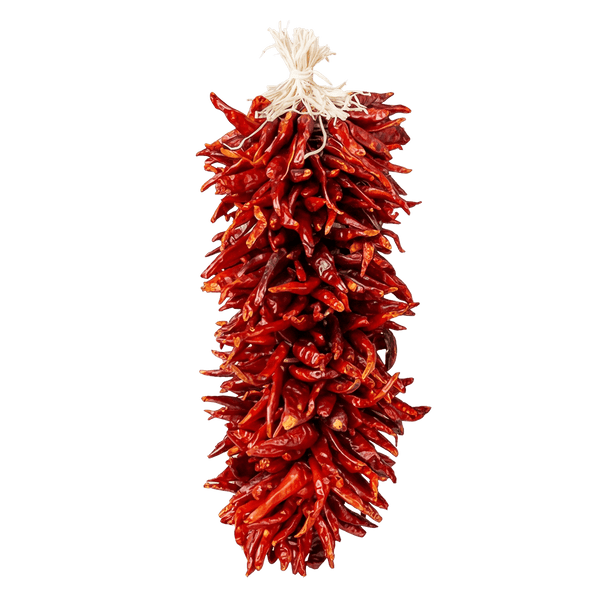
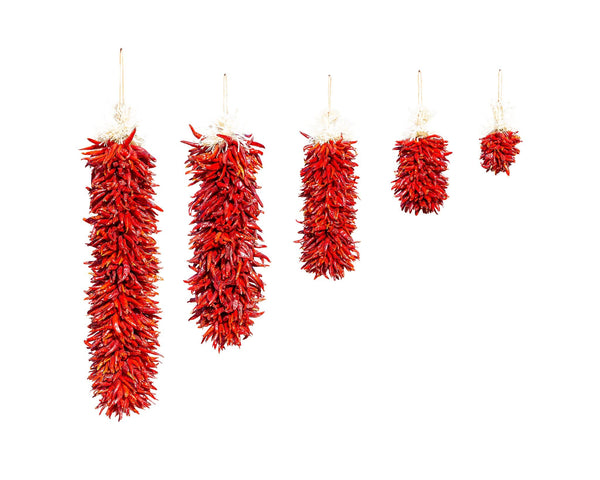
For a more delicate look with serious heat, our chile pequin ristras (also called chile de árbol) use tiny, slender peppers that pack roughly 30,000 Scoville Heat Units — nearly five times hotter than Sandia. The small pods and strong stems make these ristras tighter and more compact. Available in five sizes from 3 inches to 2 feet, they are perfect for windowsills, mantels, and narrow spaces. Shop Chile Pequin Ristras →
Chile Pequin Wreaths
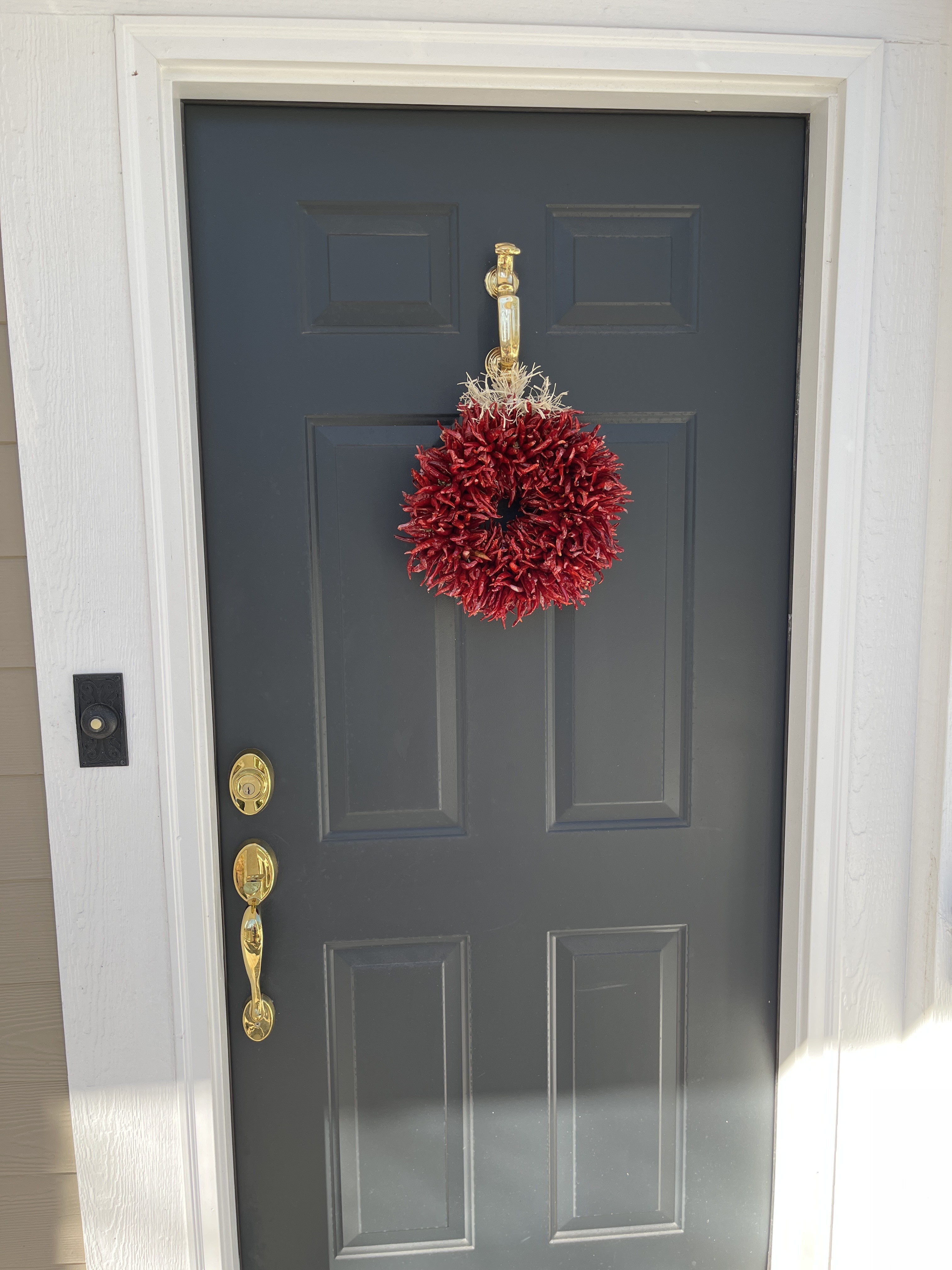
Our chile pepper wreaths are handcrafted rings of chile pequin, shaped and bound on a wire frame. A wreath uses significantly more chile than a straight ristra of comparable length, which gives it a full, lush appearance that looks stunning on a front door, above a mantel, or as a centerpiece for a Southwestern-themed wall. Particularly popular around Christmas and the fall holiday season, a chile wreath makes an unforgettable gift. Shop Chile Pequin Wreaths →
Chile Pequin Crosses
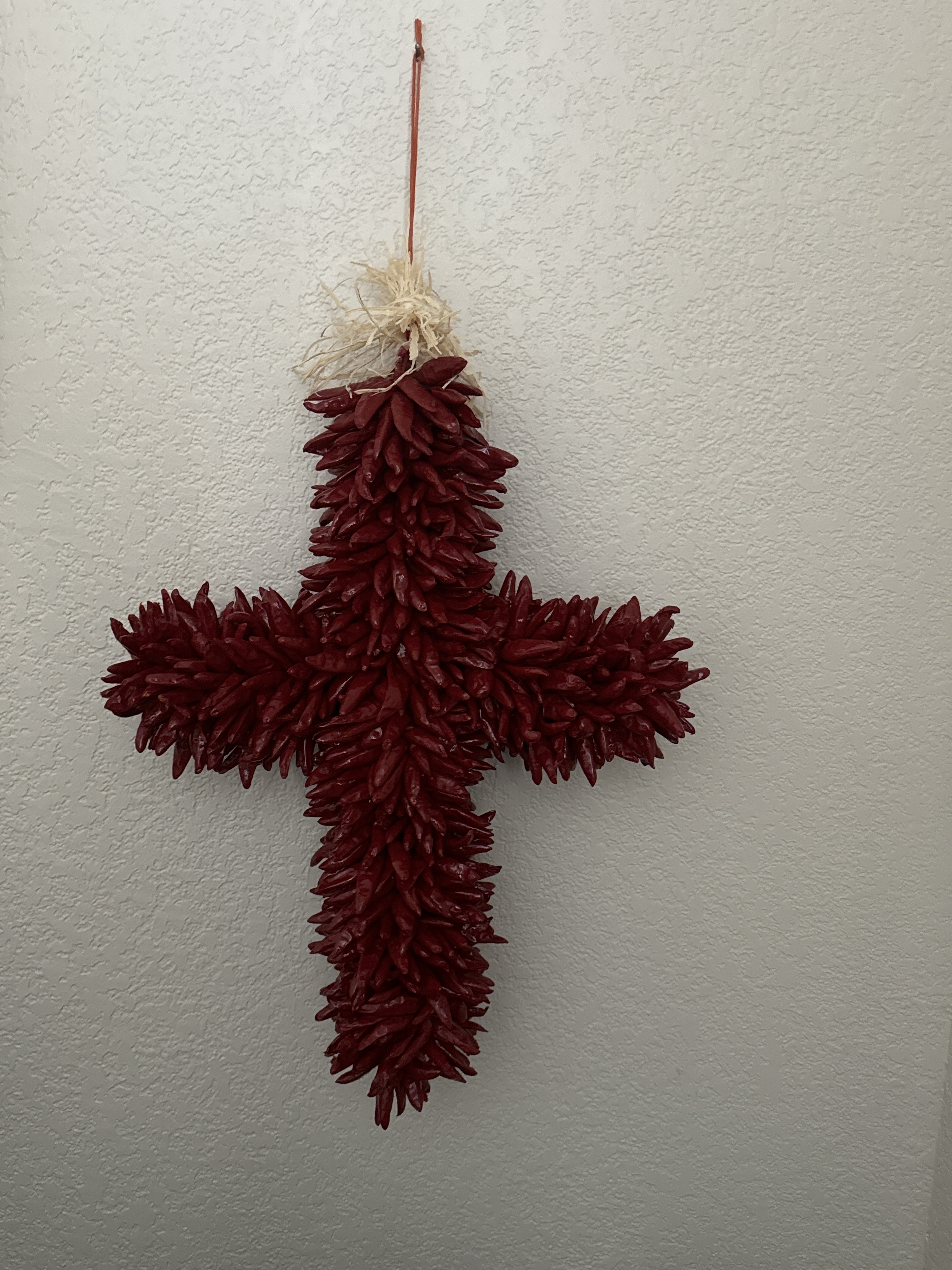
Our chile crosses combine Southwestern tradition with a faith-inspired shape. Each cross is formed from chile pequin on a wire frame, making it a meaningful decoration for a kitchen, dining room, or entryway. These are among our most-gifted items, especially for housewarmings, holidays, and religious celebrations. Shop Chile Pequin Crosses →
Sandia Chile vs. Chile Pequin: A Side-by-Side Comparison
Choosing between our two chile varieties comes down to what you want from your ristra — bold cooking versatility, or compact decoration with extreme heat. Here is how they compare:
| Feature |
Sandia (Large Chile) |
Chile Pequin / de Árbol |
| Pod Size |
5–8 inches long |
1–3 inches long |
| Heat Level |
~6,500 SHU (Hot) |
~30,000 SHU (Very Hot) |
| Flavor Profile |
Earthy, complex, slightly sweet |
Sharp, bright, intensely peppery |
| Best For Cooking |
Red chile sauce, enchiladas, posole, carne adovada |
Crushed flakes, infused oils, Thai & Mexican dishes |
| Ristra Sizes Available |
6 in · 1 ft · 1.5 ft · 2 ft · 2.5 ft · 3 ft |
3 in · 6 in · 1 ft · 1.5 ft · 2 ft |
| Shapes Available |
Traditional straight ristra |
Straight ristra · Wreath · Cross |
| Appearance |
Bold, dramatic, large pods |
Delicate, dense, tightly packed |
| Common Use |
Door hangers, kitchen cooking supply |
Wreaths, crosses, smaller décor accents |
Treated vs. Untreated Ristras: Which Should You Choose?
This is one of the most important decisions when buying a chile ristra, and one that many sellers gloss over. Here is what you need to know:
Untreated Ristras (Our Default)
Every ristra we ship leaves Hatch completely untreated unless you specifically request otherwise. That means the chile is 100% edible — you can pull pods off and cook with them anytime. Untreated ristras will naturally fade from bright red to a deeper, darker burgundy over several months, especially in direct sunlight. This is normal and does not affect flavor. An untreated ristra stored in good conditions will look great for one to two years and remain usable for cooking even longer.
Treated Ristras (+$5 at Checkout)
If your ristra is purely decorative and you want it to stay vibrant red for as long as possible, select our treatment option at checkout. We apply a clear protective coating that locks in color and adds resistance to moisture and dust. A treated ristra stored indoors and away from direct sunlight can look good for three to five years or longer. The tradeoff: treated ristras are not edible. The sealant makes the chile unsafe for consumption.
Our recommendation: If you plan to cook with your ristra at all — even occasionally pulling pods for a batch of red chile sauce — keep it untreated. If it will be a permanent wall fixture or outdoor decoration and you never intend to eat from it, the $5 treatment is worth it for dramatically extended color retention.
Cooking with Your Chile Ristra
A ristra is not just a beautiful accent — it is a pantry staple hanging on your wall. Dried red chile from a ristra produces some of the deepest, most complex flavors in New Mexican cuisine, thanks to the slow sun-drying process that concentrates and ferments the natural sugars.
How to Harvest Pods from a Ristra
Pull pods from the bottom of the ristra, then tuck the exposed string up into the remaining chile. This keeps the ristra looking full while you work your way through it over weeks or months. Start at the bottom because gravity keeps the upper pods compressed and shapely.
New Mexican Red Chile Sauce — The Mother Sauce of the Southwest
Red chile sauce is to New Mexican cooking what béchamel is to French cuisine — it is the foundation that everything else is built on. To make it from your ristra:
1. Prep the pods: Pull 8–12 dried pods from your ristra. Snap off the stems and shake out most of the seeds (leave a few in if you like extra heat).
2. Toast briefly: Press the pods flat in a dry skillet over medium heat for 15–20 seconds per side, just until fragrant. Do not burn them.
3. Rehydrate: Place the toasted pods in a bowl and cover with boiling water. Let them soak for 20–30 minutes until softened.
4. Blend: Transfer the rehydrated pods and about a cup of the soaking liquid to a blender. Add 2 cloves of garlic, ½ teaspoon cumin, ½ teaspoon oregano, and a pinch of salt. Blend until smooth.
5. Strain and simmer: Pour through a fine-mesh strainer to remove skins and seeds. Simmer the strained sauce in a saucepan for 15–20 minutes, adding chicken or vegetable broth to reach your preferred consistency.
This sauce freezes beautifully for up to a year and works as the base for enchiladas, carne adovada, posole, huevos rancheros, tamale sauce, smothered burritos, and dozens of other New Mexican staples. For more chile-inspired cooking ideas, visit our recipe collection.
Other Ways to Cook with Ristra Chile
Beyond sauce, dried ristra pods are incredibly versatile. Grind them in a spice grinder for homemade red chile powder — fresher and more flavorful than anything on a grocery shelf. Crumble dried pods directly into soups, stews, and braises for slow-building heat. Toast and grind them with cumin, garlic, and oregano for a custom New Mexican chile seasoning blend. Small chile pequin pods can be crushed into flakes for pizza, pasta, and stir-fry, or steeped whole in olive oil to create a chile-infused cooking oil that adds Southwestern heat to any dish.