





Frequently Asked Questions
Order & Shipping Help
For order, shipping, and return questions, we've got dedicated help pages with full details — pick the one that matches your situation:
Tracking and order status
- Where is my order? — tracking, "marked delivered but not here," shipping timelines by product
- Shipping policies — when we ship, how we ship, PO boxes, international, dry-ice handling
Changes to your order
- Change your shipping address
- Cancel your order
- Gift orders — what we do and don't do for gifting
Something went wrong
- My order arrived damaged
- I received the wrong item
- Missing items from my order
- Spoiled or thawed perishables
- Returns and refunds — fresh and frozen food is non-returnable; unopened, sealed shelf-stable food can be returned within 30 days (45 days during November 1–January 15). Contact us for help with damaged or incorrect items
Can't find what you need? Email support@hatch-green-chile.com or call 575.267.2067.
Quantities and Packaging
Fresh Chile
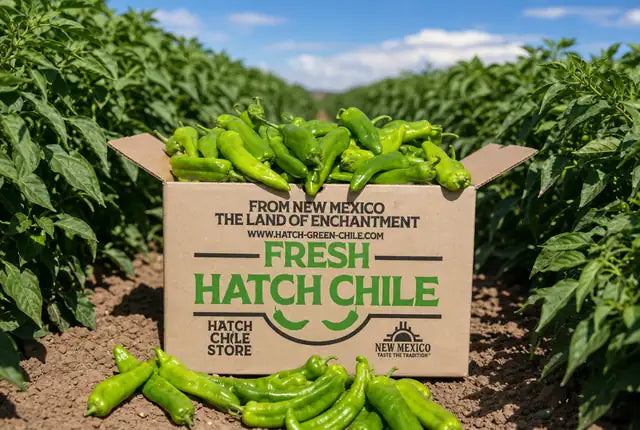
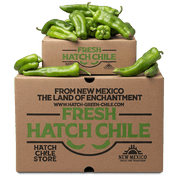
You can order your Fresh Hatch Green & Red Chile in boxes of 5, 10, and 25 pounds!
Every box of Fresh Chile is aerated so that air can flow through the box preventing the temperature inside the box from getting too hot.
Roasted Hatch Green Chile
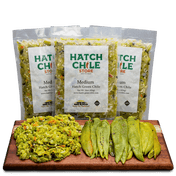
You can order Roasted Hatch Green Chile in 5 lb increments!
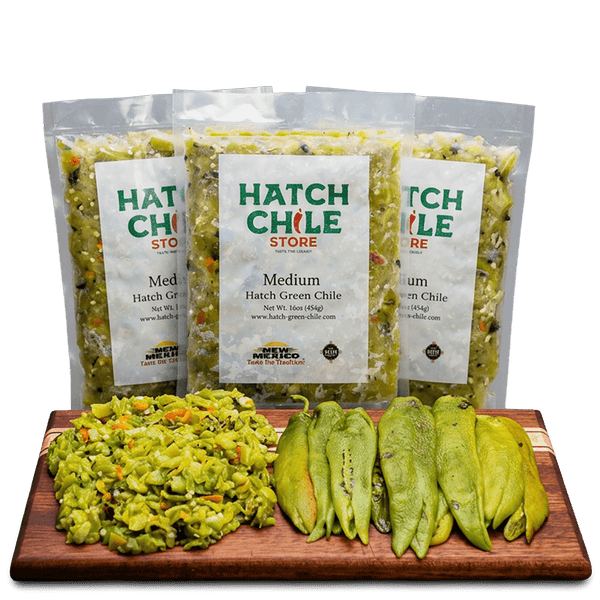
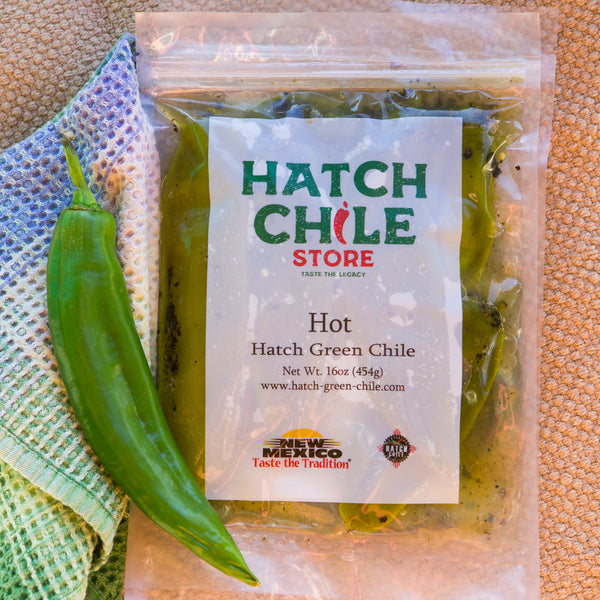
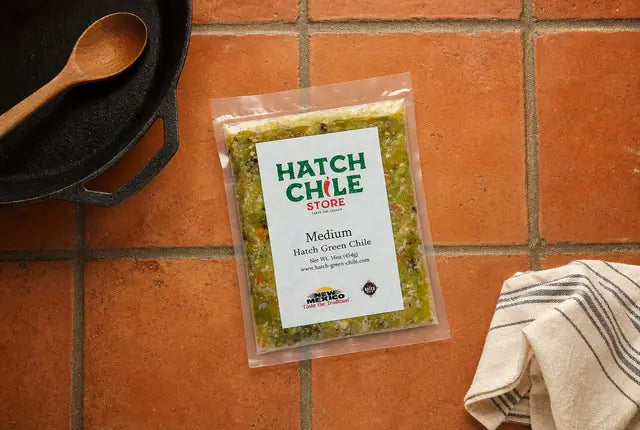
Each 5 lb increment of our Roasted Chile is packaged in 5 one-pound vacuum-sealed, re-sealable bags. There are typically 7-14 peppers per pound, depending on variety and pod size.
Our 1-pound bags are shipped in insulated boxes, much like a cooler, to ensure that the cold stays in and the heat stays out! Your chile may thaw a bit in transit but, as long as it is still cold on arrival, it is safe to re-freeze.
Rellenos, Tamales, Chimichangas & Bacon
Our Rellenos, Tamales, & Chimichangas are packaged by the dozen (12). Hatch Green Chile Bacon is sold in a 2-pound package.
Our frozen foods are shipped in insulated boxes, much like a cooler, to ensure that the cold stays in and the heat stays out! Your chile may thaw a bit in transit but, as long as it is still cold on arrival, it is safe to re-freeze.
General Info About Hatch Chile
When is the Hatch chile season?
Here are some important date ranges that will help you understand the flow of Hatch Chile season!
November-June: Pre-Order your chile, check for special deals and discounts during the pre-order season.
July: Harvest starts in late July. Each heat level ships as its harvest is ready.
Late July-Early/Mid-October: Chile season is here! We are harvesting, roasting, peeling, chopping, packaging, and shipping chile! Get your order in!
Late September-Late October: Red season is here, we are harvesting and shipping our fresh red orders!
*Weather can affect the dates mentioned above.
When is the Hatch chile festival?
The festival is held every Labor Day weekend out at the Hatch Municipal Airport. The airport is located a mile or so out of town on NM Highway 26 (the road from Hatch to Deming). Although the airport and our town aren't the most glamorous settings for an international event, the chile makes it worth attending. I'd compare our town to that hole-in-the-wall restaurant that has food so good you keep coming back. It may not be well lit; it may not be in a beautiful building, but the food is so damn good you just don't care!
Why is Hatch chile hot?
Well, chile derives its heat from the amount of capsaicin present in a given pod. Capsaicin is a chemical compound that is insoluble in water, tasteless, and odorless, and produces a sensation of burning in tissue with which it comes into contact. It is found in chile peppers in the veins.
What are scoville units?
Chile pepper heat is measured in Scoville Units. The number of Scoville Units, or Scoville Heat Units (SHU's) indicates the amount of capsaicin present.
The test that measures heat is named after its creator, American pharmacist Wilbur Scoville. His method, devised in 1912, is known as the Scoville Organoleptic Test.
In Scoville's method, a measured amount of the capsaicin oil is added to a solution of sugar and water incrementally, until the heat is just barely detectable by a panel of (usually five) tasters; the degree of dilution gives its measure on the Scoville scale. Thus, a sweet pepper or a bell pepper, containing no capsaicin at all, has a Scoville rating of zero, meaning no heat detectable. The hottest chilis, such as Habaneros, Bhut Jalokia, and Trinidad Scorpion, have a rating of 200,000 up to 2,000,000 or more, meaning their extract must be diluted over 200,000 times before the capsaicin presence is undetectable.
Hatch chile ranges from ~900 to 12,000+ Scoville Units!
Do you have a recipe book?
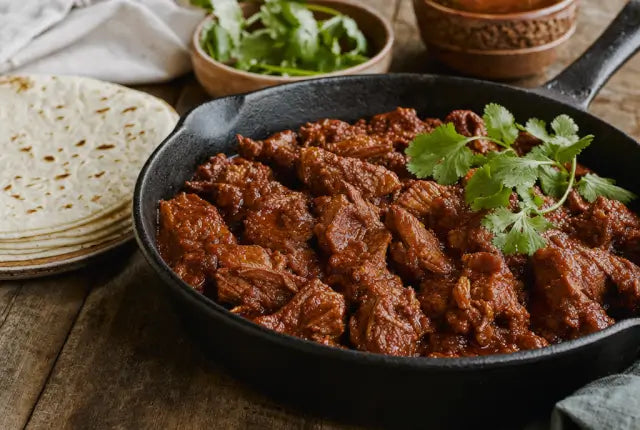
We do not have a physical recipe book but you can find all of our recipes on our blog! Here's a link! If I may be so bold, I recommend the red chile pork and chile relleno recipes.
What is the anatomy of a chile pod?
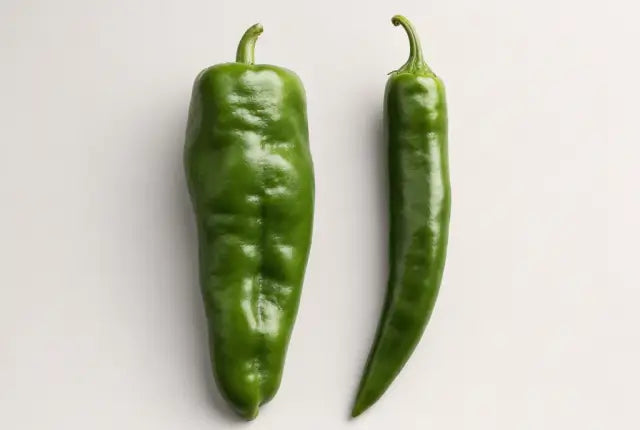
A Hatch chile pod has five parts worth knowing about:
- Stem & cap (calyx). The green crown at the top. You'll trim this off before cooking.
- Skin. The waxy outer layer. This is what blisters off during roasting — once the skin's charred, it slips right off the flesh underneath.
- Flesh (the wall). The thick meat between the skin and the inside of the pod. This is the part you actually eat, and it's where most of the flavor lives.
- Veins (placenta). The pale, papery ribs running down the inside of the pod. This is where the heat is — the capsaicin is concentrated in the veins, not the seeds. If a pod is too hot for you, cutting the veins out will tame it significantly.
- Seeds. Contrary to popular belief, the seeds themselves carry very little heat. They pick up capsaicin from the veins they're attached to, which is why they taste hot — but the veins are the real culprit.
If you're new to working with whole pods, knowing where the heat actually lives gives you control over the final dish. Want a milder enchilada sauce out of a hot variety? Devein the pods before you blend.
How do I make chile powder?
- Wash and cut eat pod into about one-inch pieces.
- Spread the pieces across your dehydrator trays and set it 100-115 degrees F for about two days (basically, until they are dry and crisp).
- Put the pieces in an electric coffee grinder and powdered the chile.
Pro Tip! Dehydrate them outside or in a shop/garage so that you don't choke everyone out of the house. Also when making the powder, wear a face mask so you don't breathe in the fine powder.
Do you sell seeds?
I'm afraid we do not sell any Hatch Green Chile Seeds. The climate and soil in the Hatch Valley are unique and really the only place Hatch Green Chile can be grown. While you can grow your own, they wouldn't have the same heat and flavor that makes Hatch Chile so iconic.
Why is there a warning on my chile powder?
All of our Hatch Red & Green Chile Powder is made with dried pods. Since the chile is never cooked during this process the FDA requires us to place a "Not Ready To Eat" warning on all of our chile powder.
If you have questions or concerns about this, please do not hesitate to reach out to a member of our team at support@hatch-green-chile.com
Why are my frozen items coming from New Jersey/California?
To ship all over the United States as quickly and affordably as possible, we use distribution centers in Edison, New Jersey, and Patterson, California.
All of our chile is grown, roasted, and packaged in Hatch, NM. Our tamales, rellenos, chimichangas, and bacon are also made in Southern New Mexico using Hatch Chile. We ship our frozen items to our distribution centers by the semi-load and they take care of packing each order.
Using distribution centers allows us to cut down on the time your package is in transit and reduce shipping costs. We can then offer our products at a lower price. It's a win-win :)
Varieties of Hatch Chile
Joe Parker/Machete (Mild)
Machete and Joe Parker are fabulous varieties for people who are new to Hatch Green Chile. These varieties are straight mild with little to no heat level variance and a small kick. If you want a real kick, you should definitely opt for our Medium. Joe Parker and Machete are slightly smaller varieties than our Big Jim and Charger, but they don't have large heat level variances like Big Jim and Charger. Joe Parker or Machete are the perfect variety if you want a little more heat than a normal pepper but still like some spice. It's also the easiest variety to peel after roasting.
Joe Parker and Machete tend to get hotter as the season rolls on, so if you want a heartier heat, please request that we ship your order towards the end of the season. Joe Parker and Machete typically yields consistent pods between 5-8 inches long, making it a great choice for chile rellenos (technically chiles relleno if you want to be picky about your Spanish grammar).
Charger / Big Jim (Medium)
Our Medium is Charger, the variety that is replacing Big Jim: earlier in the 2026 season Medium boxes were a mix of Big Jim and Charger, but Big Jim finished for the year in late September, so Medium boxes shipping now are Charger. Medium pods are large and meaty and can grow between 8 and 14 inches in length and, while they are a medium pepper, you will find a great deal of variation in heat from one to the next. Per NMSU CR706, Big Jim's cultivar mean is approximately 6,500 SHU — placing it in our Medium tier — though our pods often run a touch milder than the cultivar mean and individual pods vary plant-to-plant.
Also known as NuMex Big Jim, this variety was released by Dr. Roy Nakayama in 1975, and was listed as the world's largest chile in the Guinness Book of Records. Due to their size and shape, they are ideal for homemade chile rellenos, offering plenty of space for stuffing your favorite toppings and accompaniments. Here at The Hatch Chile Store, we sell fresh-picked Medium in 5, 10, and 25-pound boxes. A 25lb box of fresh Medium is enough for one or two people for a full year while a 10lb box might only last a few months. Our 5lb box makes a great gift and ships free!
We also sell flame-roasted, frozen Medium in either whole (for rellenos) or chopped (for everything else). Our frozen allows you to skip the work of roasting and peeling your chile while allowing you to stock up for the off-season.
G76/Sandia (Hot)
Sandia and G76 are truly a New Mexico hot. However, it is also a versatile and very tasty variety of chile ranging from five to eight inches when mature. Because of their size, our Sandia and G76 are great for making rellenos, and because of their heat, it is great for use in any dish you can think of that calls for a good kick! We currently farm two strains of Sandia and one strain of G76.
Our first strain (Sandia Legacy) is produced by Jimmy Lytle, son of Big Jim Lytle, after whom the world-famous Big Jim variety was named. The other strain (Sandia Select) is an improved strain of Sandia that is produced by Biad Chile Products. Though both offer equivalent flavor and heat, our family grows two strains for diversification and disease resistance. If one variety is more susceptible to a specific disease that gets out of control in a given year, having two strains in our fields allows us to protect the crop somewhat. G76 is a somewhat newer variety that is very similar to Sandia but tends to come off earlier in the year.
The original strain of Sandia was first released by Dr. Harper in 1956, then known as Sandia A, and officially known as Sandia as of 1967. Sandia had a heat level of between 1,500-2,000, as measured by Scoville Heat Units when first released, though today we see its heat profile running a fair bit hotter than that. It is consistently hot and spicy, without being too overpowering. We offer fresh Sandia and G76 in 5-pound, 10-pound, and 25-pound boxes and carry flame-roasted, frozen G76 and Sandia in 1lb bags.
Lumbre (X-Hot)
Literally meaning fire/flames in Spanish, our X-Hot variety Lumbre is no joke — it runs 12,000+ SHU and varies year to year. This chile is not for the faint of heart and will leave your mouth burning for hours… literally. Lumbre was developed by Jimmy Lytle, son of Big Jim Lytle for whom the Big Jim variety is named. It is much hotter than the typical jalapeno and can be used sparingly to spice up enchilada sauces and salsas.
Lumbre sets smaller pods ranging from 4-6 inches so don't expect to be making too many rellenos out of it. As a chopped chile, it packs such a big punch you can make a pot of enchilada sauce from our Mild and sprinkle in a little Lumbre if you want to turn that mild into Hot. If you're a true chile-head, Lumbre is ideal for salsa because of its intensely flavorful and extreme heat.
We offer fresh Lumbre in 5, 10, and 25 pound boxes.
Returns
What if my chile is too hot?
If you have or are concerned a heat level is too hot for you, there are a few things to do about it!
If you are concerned about trying a new heat level:
We always recommend you try the less hot variety if you are on the fence between two heat levels. You can always add heat to a dish or recipe, but it is more difficult to take it away. If you have a product too hot to eat, you might end up throwing it away, so the better value is to try the lower heat to be safe.
If you already have your chile and it is too hot:
We are sorry to hear your chile is too hot for you. We encourage you to try another bag to ensure you haven't just happened upon an atypically hot bag, which happens as some varieties can vary in heat level from pod to pod.
It is actually a myth that the seeds are what carry the heat. The veins on the inside of the meat are what contain the punch of the pod. If you can cut out those veins on the whole pod, you might see some success.
Another means of lowering the heat is to dilute the chile. We know how unfortunate it is to dilute chile flavor, but pairing the chile with products that silence the heat is a great way to still use chile that is too hot. Using the chile in a recipe is a great way to use hot chile, as the other ingredients help spread the heat around and can even lessen or negate the heat level.
Great foods to counteract heat are any dairy products, acidic fluids, or grains.
Ristras
What is a Ristra?
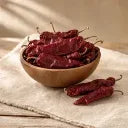
A ristra is a traditional method of storing dried chile pods. The chile is kept out of reach from pests and in reach of the kitchen, ready to add a kick of flavor to any New Mexican dish.
Today, they are as much a decoration as they are a method of storage. The gorgeous red pods provide a captivating accent to any background and are often hung inside and out on patios, kitchens, walls, and fences.
An icon of the southwest, there is no better way to celebrate New Mexican culture than to hang a ristra in your home, which has long been said to bring health and good luck. Chile ristras give both form and function, as they are a beautiful addition to any aesthetic and a great way to store sun-dried pods for future use.
Our ristras are hand-sewn in Hatch, NM, and made with sun-dried Hatch red chile. You can browse all our ristra varieties here: https://www.hatch-green-chile.com/collections/ristras
What is a ristra treatment?
Ristra "Treatment" is spraying the chile ristra with a clear sealant that will give your ristra a glossy shine and help protect it from the elements. Treatments do make the ristra inedible but can prolong your ristra's life by 6-12 months, depending on the climate. Treatment isn't magic, though, so still, practice quality care of your ristra!
We offer both treated and untreated ristras to fit everyone's needs. The treatment is an additional $5 per ristra and is only applied if it is selected at checkout. If you did not select a treatment, but would like to get your ristra treated, simply email our support team at support@hatch-green-chile.com and we can get that added to your order for you.
What is in the treatment? Our ristra-maker uses a secret family recipe, so we can't share the ingredients, unfortunately. If you have concerns about the treatment, email us and we'd be happy to answer any questions about allergies.
Chile Points
How does the rewards program work?
Using our loyalty program you can earn points by ordering your favorite Hatch Chile!
Earn Chile Points By:
Every dollar you spend is 2 Chile Points
Following our Twitter to receive 50 Chile Points
Liking our Facebook to receive 50 Chile Points
Following our Instagram to receive 50 Chile Points
You will also receive 100 points for signing up for our rewards program, you are automatically signed up for our Chile Points when you create an account with us.
Receive 250 Chile Points automatically to celebrate your birthday!
Redeem Your Chile Points:
When you reach 1,000 Chile Points you can redeem them for a discount from the Chile Points page in your account.
To check your progress, open that same Chile Points page any time. You can also read about the program on our rewards page.
Frozen Products
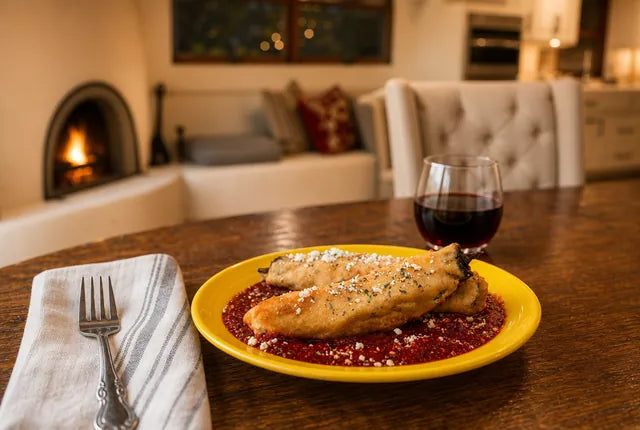
How do I cook the rellenos?
To cook our delicious rellenos, simply defrost them slightly (30 seconds in the microwave or 10-15 minutes left out). Then either:
- Pan fry the rellenos on the stove for 7-10 minutes.
- Deep fry them at 375 for approximately 4 minutes in the light cooking oil of your choice.
- Lightly spritz them with a light cooking oil and air fry at 375 for 4-5 min.
You can also oven bake them with the same temperature, but they won't be as crispy.
Enjoy!
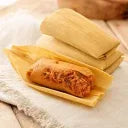
How do I cook the tamales?
There are a variety of ways to reheat your tamales. For best results, leave the wrapping on and heat to 165°F. Here are some of our favorites!
How to reheat tamales in a steamer: Fill your steamer with water, and turn the heat to medium. Place your tamales in a steamer basket over the simmering water and steam for 30 to 40 minutes from frozen, for best texture.
How to reheat tamales in an oven: Preheat your oven to 350°F, and wrap each tamale tightly in a few layers of aluminum foil, making sure there is no air. Place them in the oven for 25 to 30 minutes, covered.
How to reheat tamales in a microwave: The secret to the perfect microwaved tamale is to wrap 2 tamales in a damp paper towel. Arrange on a microwave-safe plate, making sure there is space between them. Heat the tamales for 2 minutes on high.
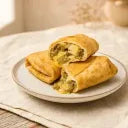
How do I cook the chimichangas?
Defrost the chimichangas slightly (30 seconds in the microwave or 10-15 minutes left out). Then pan fry the chimichangas on the stove for 7-10 minutes, or deep fry them at 375 for approximately 4 minutes in the light cooking oil of your choice. Alternatively, Air Fry on 400 till your cheese is thoroughly melted (typically around 9 minutes per 3 chimichangas)
How long do open bags of roasted chile last?
Open bags of chile last 3 to 4 days in the refrigerator. The best way to extend your use of the roasted chile is by defrosting half a bag at a time. This is done by partially submerging the bag in water. By placing the bag in the water vertically, you can defrost exactly as much chile as you need, collect it, then reseal the bag, and put it back in the freezer.
Nutrition and Ingredients
Do you have vegetarian and vegan products?
We offer a variety of vegan and vegetarian products.
Our Vegan products:
- All roasted and fresh chile
- All sauces & salsas (except those noted below)
- All ristras
- Spiced pecans and pistachios
- Hatch Hot Honey
All of our products are vegetarian, except for the following:
- Red Chile Pork Tamales
- Green Chile Chicken Tamales
- Green Chile Cheese Tamales (no meat or lard, but the package doesn't say whether the cheese enzymes are vegetarian)
- Green Chile Cheese & Chicken Chimichangas
- Green Chile Cheese & Beef Chimichangas
- Salsa Roja
- Salsa Verde
- Cocktail Sauce
- Sweet & Spicy Hatch Red Chile BBQ Sauce
Are your products gluten free?
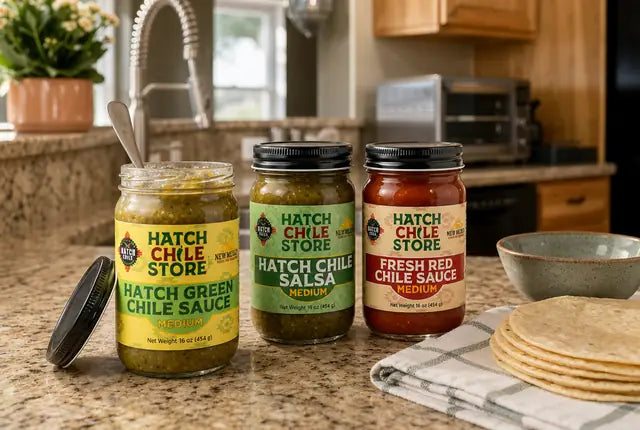
All of our Roasted and Fresh Hatch Green Chile, chile powders, and seasonings are gluten-free! Most of our sauces and salsas are gluten-free but be sure to check the listed ingredients on the product page before purchasing.
Our rellenos, tamales, and chimichangas are not gluten free.