




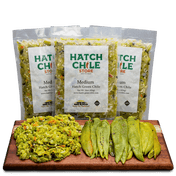


New Mexico Red Chile
The Hatch Valley's other harvest — the same chile you love, left on the plant to ripen, sun-dried, and turned into the deep, earthy red at the heart of New Mexican cooking.
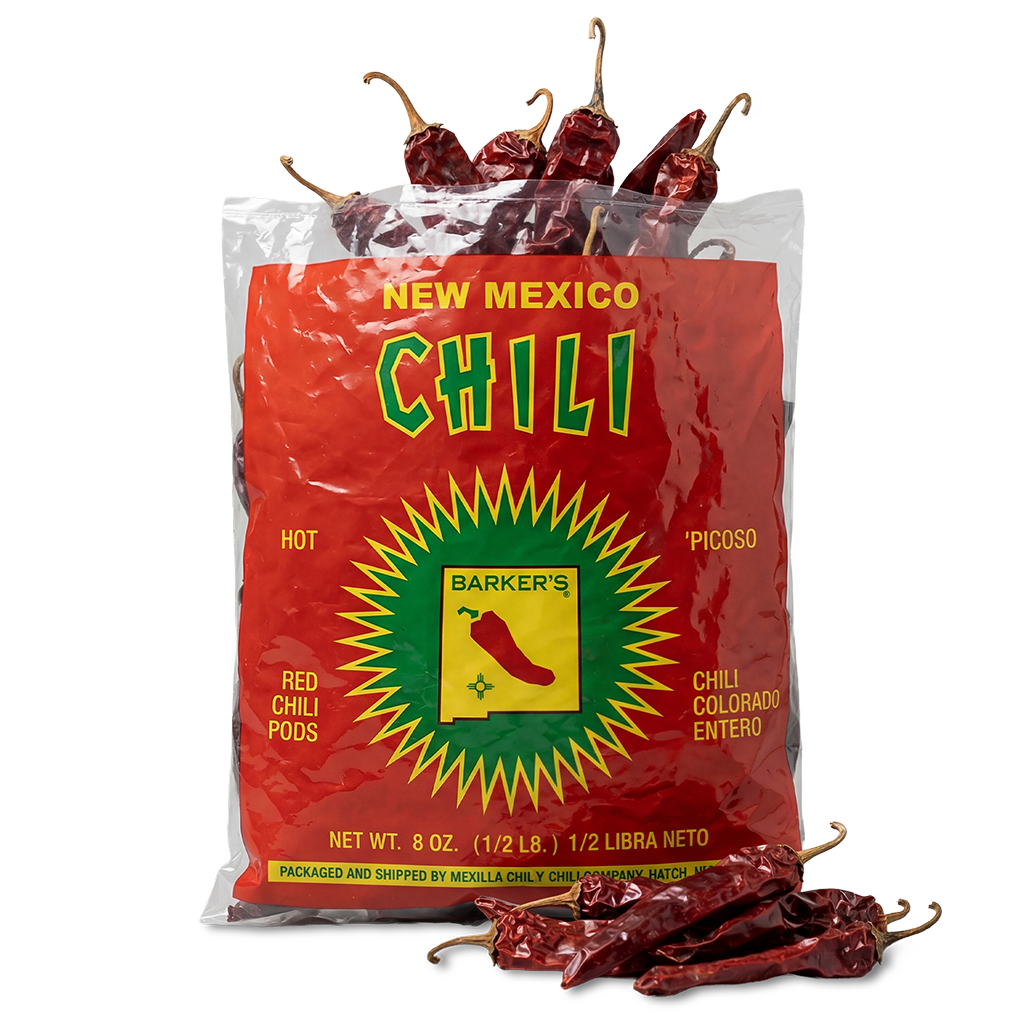
Ask anyone in New Mexico the official state question — “Red or green?” — and you’ve found the heart of our cuisine. Most people meet Hatch chile in its green form, picked at the peak of summer and fire-roasted. But the same pods, left to ripen on the plant under the Hatch Valley sun, turn a deep, glossy red. That red chile is its own tradition: rounder, sweeter, and the soul of dishes like carne adovada, huevos rancheros, and red enchiladas.
We’re the Mitchell family, fifth-generation growers and descendants of Joseph Franzoy, the first commercial chile farmer in the Hatch Valley. We grow our red chile in the very same fields as our green — because it is the same chile. Our family’s century in the valley is as much a red-chile story as a green one.
Red Is Just Ripe Green
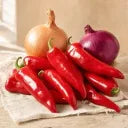
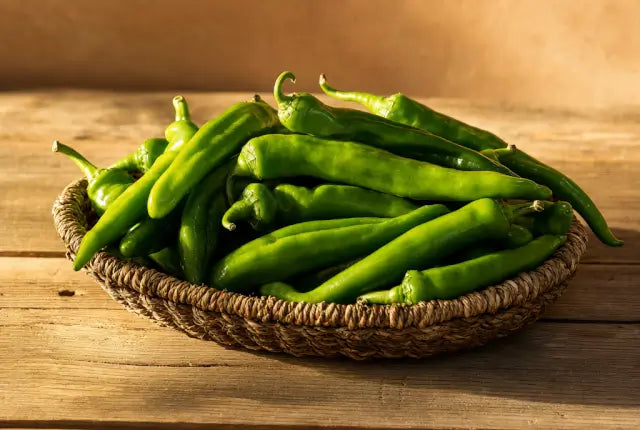
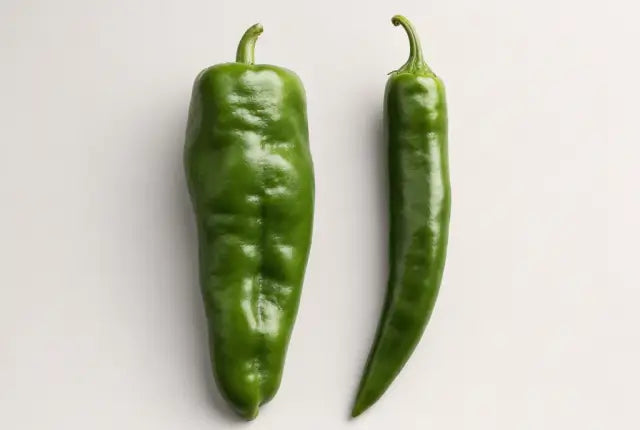
Green chile and red chile aren’t different plants — they’re different moments in the life of the same pepper (Capsicum annuum). Pick a Hatch pod in late summer and it’s bright, grassy, and green. Leave it on the plant a few more weeks and it ripens through to a deep red, the same way a bell pepper or a tomato sweetens as it matures. If you’re still wondering what makes a chile a true Hatch chile, the answer is the same for both colors: the Hatch Valley terroir.
As the pod ripens, its sugars develop and its flavor deepens — from the bright, vegetal punch of green to something rounder and more complex, with notes people describe as earthy, raisiny, even faintly chocolatey. The heat doesn’t disappear: a chile’s Scoville level is set mostly by its variety and how it was grown, so a hot pod picked green is still hot when it ripens red. What changes is the depth of flavor.
“Red or Green?” — New Mexico’s State Question
In 1996, New Mexico made “Red or green?” its official state question, asked at restaurants across the state when you order. Can’t choose? Answer “Christmas” and you’ll get both. See how the colors compare across cultivars in our Hatch chile heat level guide.
From the Field to the Ristra
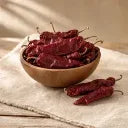
Once the chile has ripened red, it’s traditionally dried rather than roasted. Strung into ristras — those iconic hanging garlands you see on porches across the Southwest — or laid out under the high-desert sun, the pods slowly lose their moisture and concentrate their flavor. What’s left are whole New Mexico red chile pods: leathery, fragrant, and ready to become sauce or powder.
Drying is also why red chile is a year-round pantry staple. Long after the fresh green harvest is gone, a bag of dried pods keeps the Hatch Valley in your kitchen through the winter.
Pods vs. Powder
Red chile reaches your kitchen two main ways, and which you choose depends on how you cook:
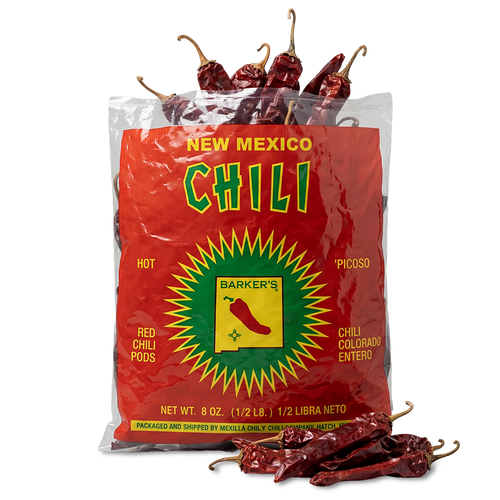
- Whole dried pods — stemmed, seeded, soaked, and blended into a smooth, brick-red sauce from scratch. This is the traditional path to real red chile sauce, and nothing beats the flavor of whole dried red chile pods you rehydrate yourself.
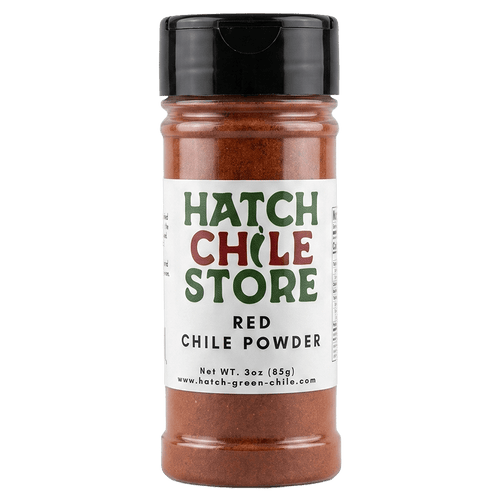
- Red chile powder — the same pods, simply ground. Faster and more forgiving: whisk it straight into a roux or stew. Our Hatch red chile powder is pure ground chile, nothing added.
Many New Mexican cooks keep both on the shelf — pods for a weekend pot of sauce, powder for a weeknight shortcut.
How to Cook With Red Chile
Red chile is the backbone of New Mexico’s most beloved dishes:
- Red chile sauce — rehydrated pods blended with garlic and a little salt; the base of nearly everything below.
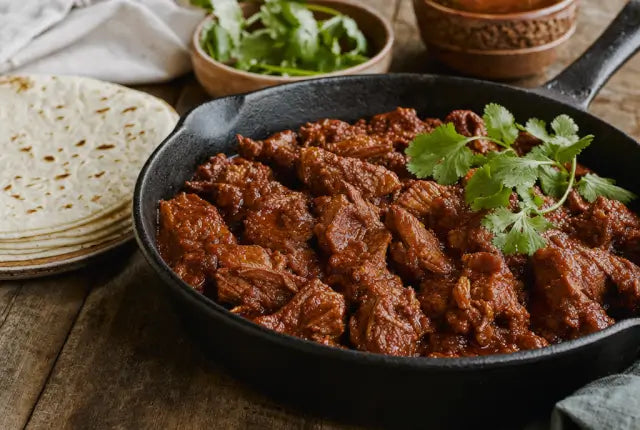
- Carne adovada — pork slow-braised in red chile until it falls apart.
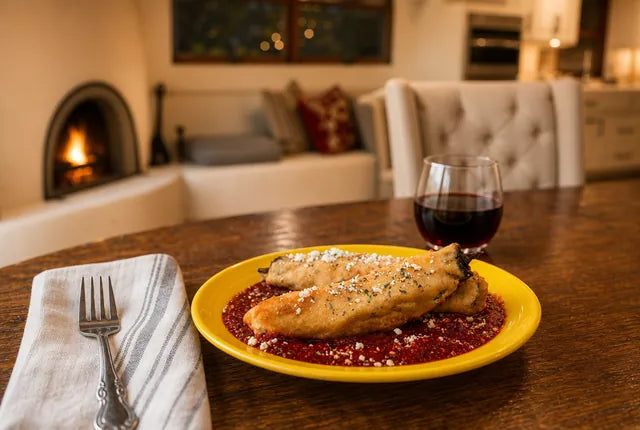
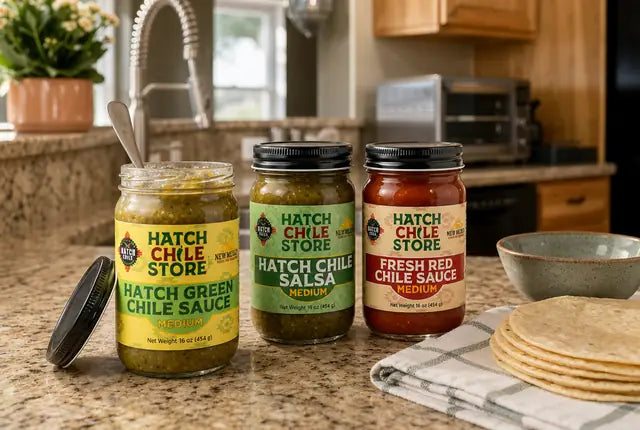
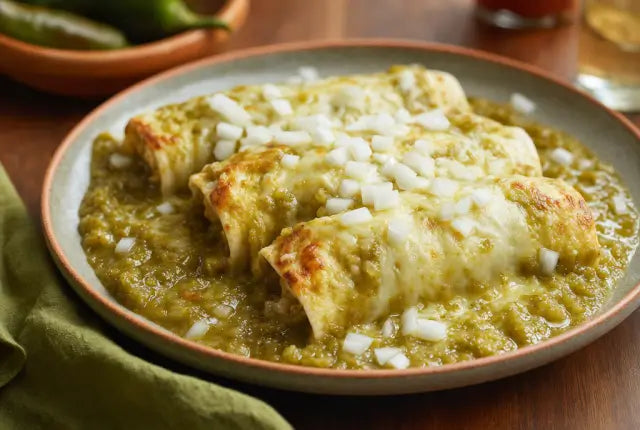
- Red enchiladas — corn tortillas bathed in red sauce. For a festive twist, pair red and green sauces in our Christmas enchiladas recipe. Want a shortcut? Reach for a jar from our red enchilada sauce collection.
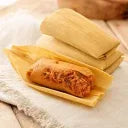
- Huevos rancheros, posole, and tamales all lean on a good red.
Start with authentic Hatch red chile pods and you’re cooking the way the Hatch Valley has for generations. For more inspiration, see our full guide to cooking with Hatch chile.
Heat & Flavor
Like our green chile, red Hatch chile spans the whole heat spectrum — from mild, family-friendly cultivars to the fiery Barker and Lumbre. Because heat comes from the variety and the terroir rather than the color, you can pick your red chile by the same heat levels you’d use to choose green. Our heat level guide breaks down where each cultivar lands.
Bring Home the Red Harvest
Whole, sun-dried pods grown on our family farm in the Hatch Valley — the real foundation of New Mexican red chile sauce.
Shop Dried Hatch Red Chile Pods