








How Chile Peppers Spread Worldwide: From Mexico to Every Continent
Chile peppers originated in Mexico and the broader Mesoamerican region, where they were cultivated by Indigenous peoples for at least 6,000 years before European contact — and within just 50 years of Christopher Columbus's 1492 voyage, chile peppers had reached Europe, Africa, India, and Asia. That is one of the fastest documented diffusions of a food crop in human history. Understanding how chile peppers spread worldwide helps us appreciate why the Capsicum genus is now one of the most widely consumed spice crops on the planet, and why the specific terroir of places like New Mexico's Hatch Valley produces something truly irreplaceable.
The Origins: Mesoamerica Before Columbus
The story begins long before any European ever tasted a chile. Archaeological evidence from the Tehuacan Valley in Mexico, analyzed by researchers at the Smithsonian National Museum of Natural History, confirms that wild Capsicum annuum was being harvested and eventually domesticated as far back as 7,500 BCE. By the time the Aztec Empire was at its height, chiles were a dietary staple, a currency, and a medicine.
The NMSU Chile Pepper Institute — the world's only academic institution dedicated exclusively to chile pepper research, located in Las Cruces, New Mexico — documents that Indigenous peoples across Mesoamerica cultivated dozens of distinct chile varieties long before European arrival. These included ancestors of what we now recognize as jalapeño, serrano, and the ancestral strains that would eventually evolve, through generations of careful selection, into the celebrated Hatch green chile grown in our fields today.
Columbus and the First Global Export
When Columbus arrived in the Caribbean in 1492, he encountered what the Taíno people called ají. Believing he had found a New World relative of black pepper (Piper nigrum), he brought samples back to Spain and called them "peppers" — a misnomer that stuck permanently. His ship's physician, Diego Álvarez Chanca, wrote the first European description of chiles in 1494, noting their use as both food and medicine among Caribbean islanders.
Within a decade, Portuguese traders had carried chiles to their trading posts along the West African coast and into India via the sea route around the Cape of Good Hope. This was not accidental. Chiles were lightweight, dried easily for long voyages, and offered a pungent heat that traders immediately recognized as commercially valuable — a substitute for expensive Asian black pepper that could be grown locally almost anywhere with a warm climate.
How Chiles Conquered Each Continent
Europe: Slow Adoption, Lasting Influence
Spain and Portugal were the first European nations to encounter chiles, but adoption across the continent was uneven. According to food historian Ken Albala's research documented in Food in Early Modern Europe (Greenwood Press, 2003), chiles were initially grown as ornamental plants in Spanish monastery gardens before gradually entering the kitchen. Hungary proved to be one of the most enthusiastic adopters — by the 18th century, ground dried chiles had become paprika, now inseparable from Hungarian culinary identity.
Africa: A Rapid and Deep Integration
Portuguese traders introduced chiles to West Africa's coastal regions in the early 1500s, and the crop spread inland with remarkable speed. The hot, humid climate across equatorial Africa proved ideal for Capsicum chinense varieties in particular. Chiles like the African bird's eye (known locally as peri-peri or pili pili) became so embedded in regional cuisines that many populations today assume they are indigenous. The USDA FoodData Central database lists bird's eye chiles among the most capsaicin-dense varieties commercially available, with Scoville Heat Units frequently exceeding 100,000.
Asia: The Transformation of Ancient Cuisines
Perhaps the most dramatic transformation occurred in Asia. Portuguese traders brought chiles to Goa, India, around 1510, and within a century the pepper had restructured the entire spice economy of the subcontinent. Black pepper and long pepper, which had dominated Indian cooking for millennia, were partially displaced by the far cheaper and easier-to-grow Capsicum.
From India, chiles traveled the overland and maritime trade routes into Southeast Asia, China, Korea, and Japan. Korean cuisine, now famous worldwide for its chile-heavy fermented dishes like kimchi, had no chile peppers before the late 16th century. According to research published by the Korea Food Research Institute, chiles arrived in Korea via Japanese traders around 1592 during the Imjin War — and within 200 years had become so central to Korean cooking that their pre-chile culinary history is largely forgotten by the general population.
The Americas Beyond Mexico: Northward Expansion
While chiles were spreading globally, they were also moving northward within the Americas. Pueblo peoples in what is now New Mexico were cultivating Capsicum annuum varieties centuries before Spanish colonizers arrived in the late 1500s. When Spanish missionaries and settlers established the Rio Grande corridor as a trade and agricultural route, they encountered chile cultivation already flourishing in the region.
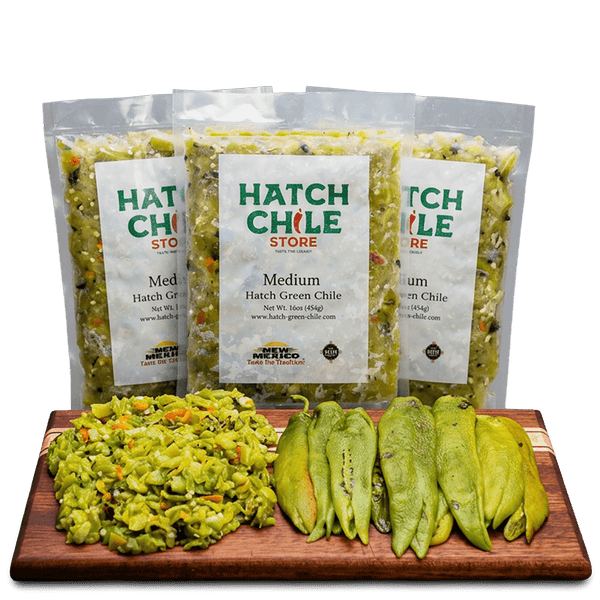
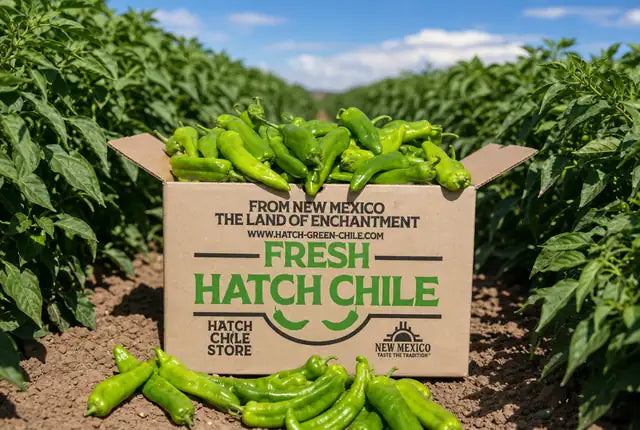
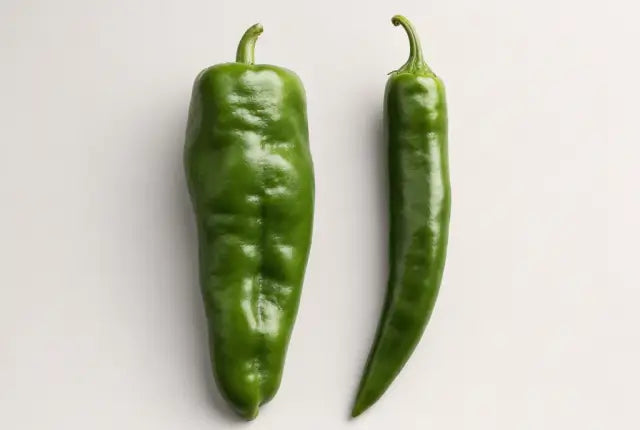
The specific microclimate of the Hatch Valley — high desert elevation, alkaline soil, dramatic day-to-night temperature swings, and intense summer sunshine — began producing chiles with a flavor profile distinct from anything grown elsewhere. Our family has grown chile in the Hatch Valley for five generations.
The Science of Why Chiles Traveled So Successfully
Chile peppers are, from a botanical standpoint, extraordinarily well-suited for global travel and adaptation. The NMSU Chile Pepper Institute identifies several key factors:
- Seed viability: Dried chile seeds remain viable for 2–5 years under proper conditions, making them practical cargo on long ocean voyages.
- Climate adaptability: The Capsicum genus includes species suited to tropical lowlands, temperate highlands, and semi-arid desert climates.
- Dual-use value: Chiles function simultaneously as food, medicine (capsaicin has documented analgesic properties, per the National Institutes of Health), and preservative — making them valuable in pre-refrigeration economies.
- Rapid maturation: Most Capsicum annuum varieties reach harvestable maturity within 70–90 days, allowing farmers to evaluate and adopt them quickly.
- Drying for transport: Fresh chiles can be dried into shelf-stable products that concentrate flavor and heat, making them ideal trade goods.
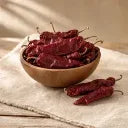
Our dried chile varieties represent the same preservation method that allowed chiles to cross oceans in the 1500s — and they deliver the same depth of flavor that made these peppers so irresistible to every culture that encountered them.
Key Chile Varieties and Their Global Journeys
| Chile Variety | Origin Region | Primary Destinations | Global Descendants |
|---|---|---|---|
| Capsicum annuum (ancestral) | Mexico / Mesoamerica | Spain, then global | Paprika, jalapeño, Hatch chile, New Mexican varieties |
| Capsicum chinense | Amazon Basin | Caribbean, West Africa, Southeast Asia | Habanero, Scotch bonnet, ghost pepper |
| Capsicum frutescens | Central America | Africa, Asia via Portugal | Tabasco, bird's eye / peri-peri |
| Capsicum baccatum | Bolivia / Peru | Limited global spread | Ají amarillo, bishop's crown |
Hatch Chile: A New Mexico Original
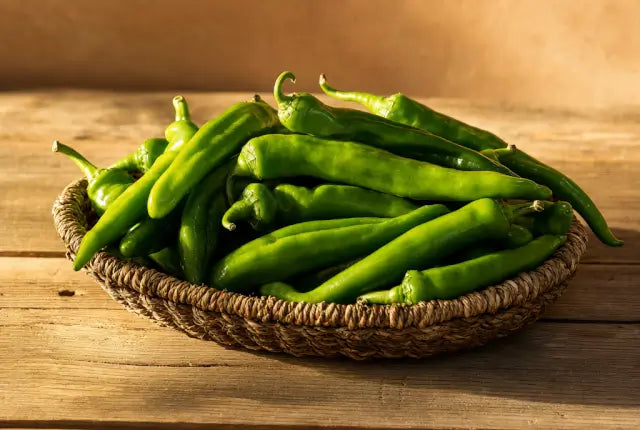
Within the broader story of chile's global journey, the Hatch Valley represents a remarkable endpoint — a place where centuries of cultivation, specific environmental conditions, and dedicated farming families converged to produce something singular. The New Mexico State University Chile Pepper Institute formally recognizes "Hatch chile" as designation tied to geographic origin, similar in principle to European protected designations of origin.
New Mexican chile varieties — including Big Jim, NuMex Heritage 6-4, Sandia, and Lumbre — were developed through NMSU's breeding programs beginning in the 1890s with Fabian Garcia, who is widely credited as the father of the commercial New Mexico chile industry. His work systematized what generations of Pueblo and Hispanic farmers had developed through intuition and observation.
Today, when you roast a Hatch green chile or simmer a pot of red chile sauce using our red chile, you are participating in a food tradition that stretches back through centuries of New Mexico agricultural history, and ultimately back to those first domesticated plants in the Tehuacan Valley of Mexico.
Frequently Asked Questions
Where did chile peppers originally come from?
Chile peppers originated in Mexico and the broader Mesoamerican region. Archaeological evidence analyzed by the Smithsonian National Museum of Natural History places the earliest harvesting of wild Capsicum annuum in Mexico's Tehuacan Valley at approximately 7,500 BCE. Domestication and cultivation by Indigenous peoples followed over subsequent millennia.
How did chile peppers reach Asia so quickly after Columbus?
Portuguese maritime traders carried chiles from the Americas to their trading posts along the West African coast and then to Goa, India, around 1510 — less than 20 years after Columbus's first voyage. From India, chiles spread through established overland and sea trade routes into Southeast Asia, China, Korea, and Japan within the following century. The speed of spread reflected the practical value of chiles as a lightweight, shelf-stable, and economically significant spice crop.
What makes Hatch chile different from other New Mexico chiles?
Hatch chile refers specifically to Capsicum annuum varieties grown in New Mexico's Hatch Valley, a stretch of the Rio Grande floodplain in Doña Ana County. The combination of high desert elevation, alkaline sandy loam soil, intense summer sunshine, and dramatic day-to-night temperature swings produces a flavor profile — earthy, slightly sweet, and complex in heat — that cannot be fully replicated by growing the same seed varieties elsewhere. The NMSU Chile Pepper Institute recognizes this geographic distinctiveness in how it classifies New Mexican chile varieties.
Which chile pepper varieties are most important globally today?
According to the USDA FoodData Central database and FAO agricultural production statistics, Capsicum annuum varieties account for the largest share of global chile production and include paprika peppers, jalapeños, bell peppers, and New Mexican varieties like those grown in the Hatch Valley. Capsicum chinense varieties — including habanero and Scotch bonnet — dominate Caribbean and West African markets. Capsicum frutescens, including bird's eye and Tabasco types, is significant across Africa and Southeast Asia.
Can I grow Hatch chile varieties outside of New Mexico?
Seeds from New Mexican chile varieties including Big Jim and NuMex Heritage 6-4 can be grown outside of New Mexico, and gardeners in similar climates — warm summers, low humidity, well-drained soil — often have good results. However, the NMSU Chile Pepper Institute has documented that the specific terroir of the Hatch Valley meaningfully affects flavor, sugar content, and wall thickness in the mature fruit. Chiles grown from identical seed stock in different environments will produce noticeably different results in the kitchen.