







Hatch Green Chile Nutrition: Vitamin C, Calories and What It Does for You
Nutrition facts per pod, half cup and 100 grams, red vs green, and how fresh, frozen and canned compare.
- Vitamin C in one raw pod121%of a day's value
- Red or green?Greenmore vitamin C
- Fresh, frozen or canned?Fresh or frozenfar less sodium
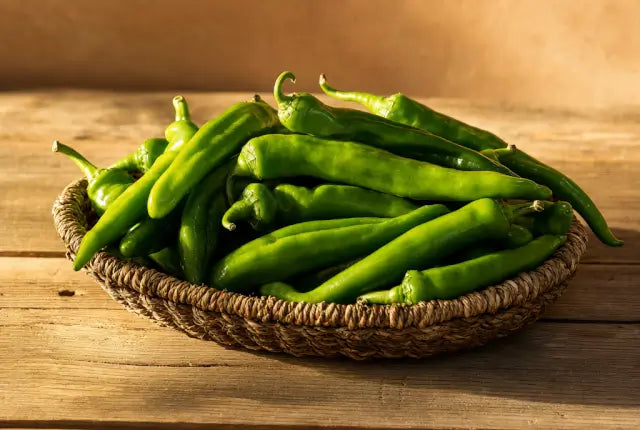
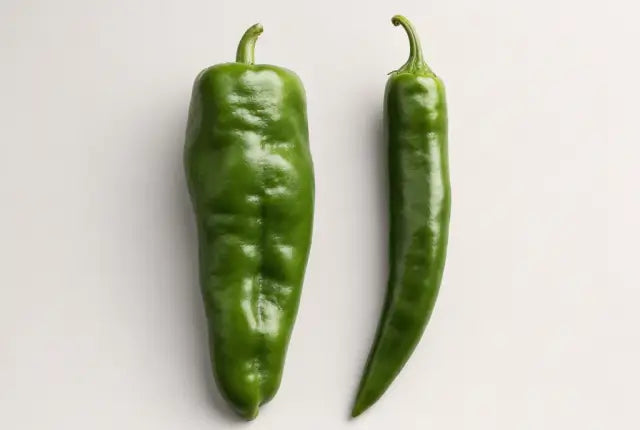
Hatch green chile is mostly water, with 40 calories per 100 grams and almost no fat. One raw pod (45 grams) has 109 mg of vitamin C, more than a day's worth and more than a medium orange. You also get a little vitamin B6, copper and potassium, and almost no sodium.
Hatch green chile nutrition facts
| Nutrient | 1 pod (45 g) | ½ cup chopped (75 g) | 100 g |
|---|---|---|---|
| Calories | 18 | 30 | 40 |
| Vitamin C | 109 mg (121%) | 182 mg (202%) | 243 mg (269%) |
| Vitamin B6 | 0.13 mg (7%) | 0.21 mg (12%) | 0.28 mg (16%) |
| Copper | 0.08 mg (9%) | 0.13 mg (15%) | 0.17 mg (19%) |
| Vitamin A | 27 mcg (3%) | 44 mcg (5%) | 59 mcg (7%) |
| Potassium | 153 mg (3%) | 255 mg (5%) | 340 mg (7%) |
| Fiber | 0.7 g (2%) | 1.1 g (4%) | 1.5 g (5%) |
| Carbohydrate | 4.3 g | 7.1 g | 9.5 g |
| Protein | 0.9 g | 1.5 g | 2 g |
| Fat | 0.1 g | 0.2 g | 0.2 g |
| Sodium | 3 mg (0%) | 5 mg (0%) | 7 mg (0%) |
USDA doesn't list Hatch chile on its own, so this label uses its numbers for raw green chile, the standard reference. Our frozen chile has its own label, further down. More on the vitamin C: Hatch chile vs. oranges.
Why Hatch chile is different
Hatch chile is New Mexico chile grown in the Hatch Valley, which sits at about 4,000 feet, with sandy loam soils watered by the Rio Grande and hot days followed by cool nights. Those conditions produce chiles with unusually high levels of capsaicin and antioxidants. The NMSU Chile Pepper Institute has documented this regional influence: soil minerals and the swing between day and night temperatures affect how much vitamin C and capsaicin build up in the fruit wall, and the same variety runs hotter after a hot, stressful summer. Our family has grown chile in the Hatch Valley for five generations. For how the valley shapes the chile, see what makes a chile Hatch, and for the heat, our Heat Level Guide.
Is red or green chile healthier?

Red chile is green chile left to ripen on the plant (more in green vs. red chile). Raw, both have 40 calories per 100 grams. Green has more vitamin C, and red has almost twice the vitamin B6.
| Nutrient | Green | Red |
|---|---|---|
| Calories | 40 | 40 |
| Vitamin C | 243 mg | 144 mg |
| Vitamin B6 | 0.28 mg | 0.51 mg |
| Vitamin A | 59 mcg | 48 mcg |
| Potassium | 340 mg | 322 mg |
| Fat | 0.2 g | 0.4 g |
Fresh, frozen or canned green chile
- Freshraw, per 100 g
- 243 mg of vitamin C and 7 mg of sodium. Roast it yourself in season.
- Our frozenroasted, per pod
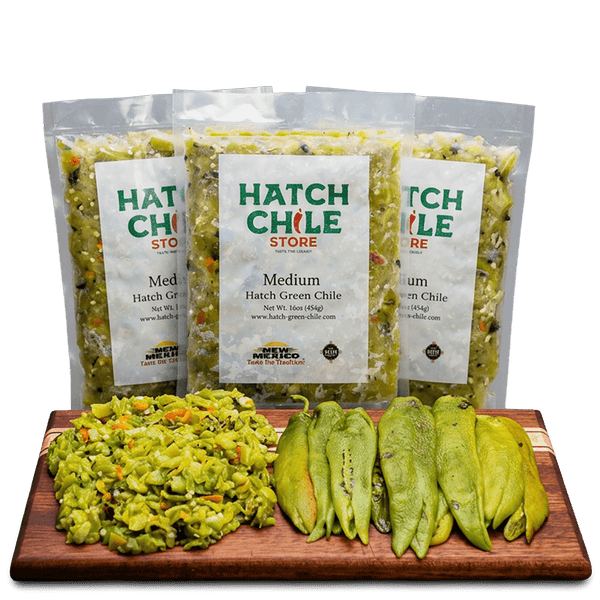
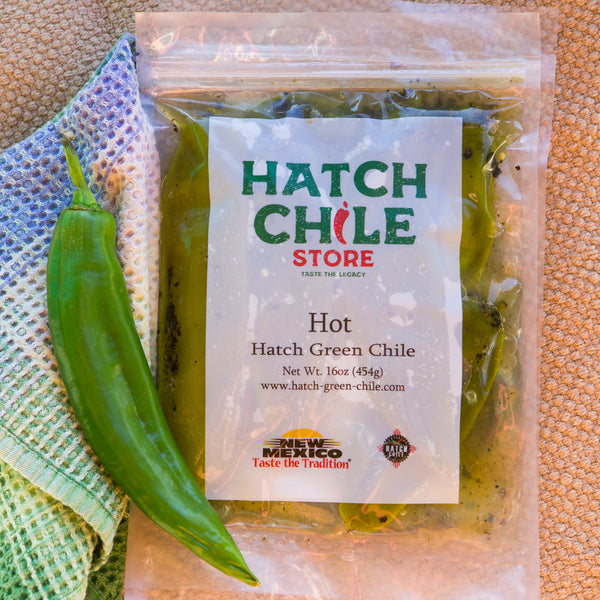
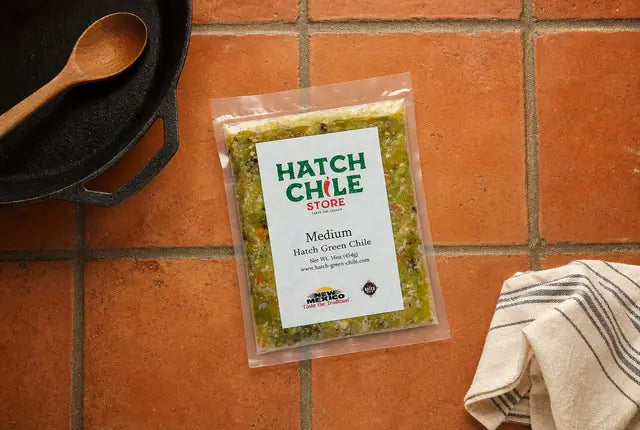
- 5 calories, 25% of a day's vitamin C and 0 mg of sodium, from its label. Flame-roasted, with no preservatives or additives.
- Cannedper 100 g
- USDA's entry for canned green chile lists 34 mg of vitamin C and 397 mg of sodium.
The NIH notes that eating more potassium and less sodium might help lower blood pressure. Fresh and frozen chile keep sodium near zero.
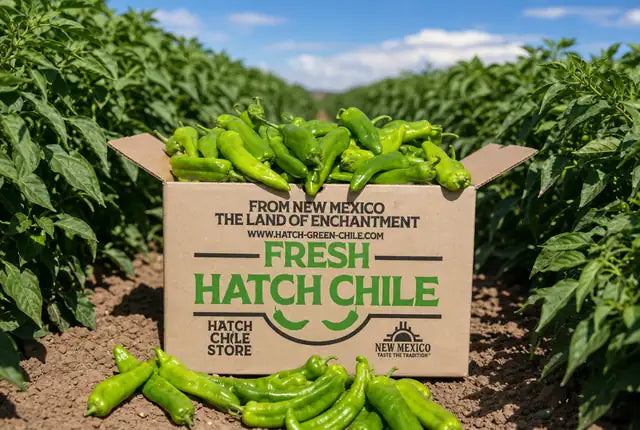
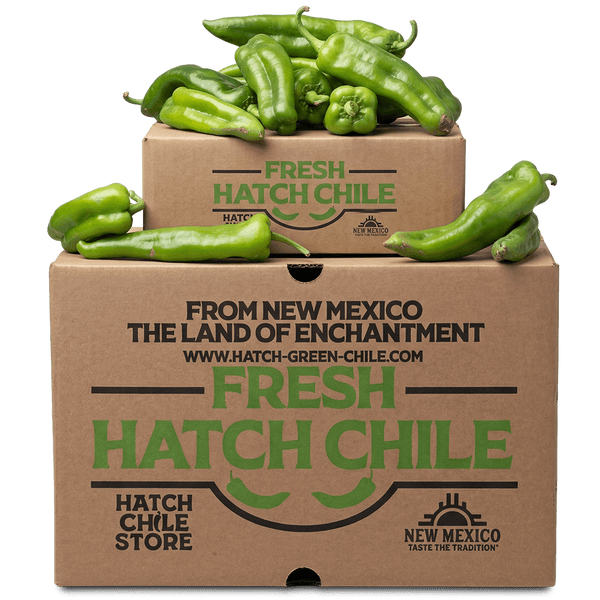
Hatch green chile, fresh or roasted
Health benefits of Hatch green chile
Vitamin C is the standout: one raw pod has 121% of a day's value, and nothing else on the label tops 9%. A pod of our frozen roasted chile gives 25%. Vitamin C is an antioxidant that helps protect cells from damage, and your body uses it to make collagen, which helps wounds heal. It also helps you absorb iron from plant foods and keeps the immune system working.
Chile is also light. A raw pod has about 18 calories and a pod of our frozen chile has 5, with almost no fat, and raw Hatch green chile has only 7 mg of sodium per 100 grams. This is general information, not medical advice. If chile bothers your stomach, read chile allergy vs. intolerance.
Easy ways to eat more green chile


Chile rellenos
Whole roasted chiles stuffed with beef and cheese, battered and fried. Get the recipe.
Find more in our Hatch chile recipes.
Questions people ask
Is Hatch green chile healthy?
Hatch green chile has 40 calories per 100 grams and almost no fat, and one raw pod has more than a day's vitamin C. It also adds a little vitamin B6, copper and potassium, and almost no sodium.
Are green chiles good for you?
They're low in calories and fat, and Hatch green chile is rich in vitamin C, with more than a day's worth in one raw pod. If chile bothers your stomach, see chile allergy vs. intolerance.
How much vitamin C is in green chile?
About 109 mg in one raw pod (121% of a day's value), 182 mg in half a cup chopped, and 243 mg in 100 grams. A pod of our frozen roasted chile lists 25% on its label.
Which is healthier, red or green chile?
Raw, they have the same calories. Green has more vitamin C (243 mg vs 144 mg per 100 grams). Red, which is green chile left to ripen, has almost twice the vitamin B6.
How many calories are in green chile?
About 18 in one raw pod, 30 in half a cup chopped, and 40 in 100 grams. A pod of our frozen roasted chile lists 5 calories.
Are canned green chiles good for you?
They're low in calories, but USDA's entry for canned green chile lists 34 mg of vitamin C and 397 mg of sodium per 100 grams, compared with 243 mg and 7 mg for raw Hatch green chile. Our frozen chile's label shows 0 mg of sodium.
Does green chile have more vitamin C than an orange?
Yes. One raw green chile pod has about 109 mg of vitamin C. A medium orange has about 70 mg.
Is green chile anti-inflammatory?
No food is a treatment for inflammation. Green chile is rich in vitamin C, an antioxidant that helps protect cells from damage. For what research says about capsaicin, see our capsaicin and inflammation guide.
Nutrients: USDA FoodData Central, raw green chile (170497), raw red chile (170106), canned green chile (168577) and raw orange (169097). Daily Values: FDA. Vitamin C and potassium: NIH Office of Dietary Supplements, Vitamin C and Potassium. Growing conditions and heat: NMSU, Measuring Chile Pepper Heat. Our frozen chile: the label on Roasted Hatch Chile (Frozen).
Keep chile in the freezer
Flame-roasted Hatch green chile with no preservatives or additives, frozen and ready for stew, eggs or sauce all year.
Shop roasted Hatch chileMore on chile and health: Vitamin C: chile vs. oranges. Capsaicin and pain. Chile and metabolism.