



Yummylyle h · Verified

Featured this season
Fresh & frozen
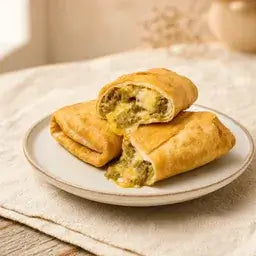 Frozen New Mexican Foods
Ready-to-heat frozen favorites
Frozen New Mexican Foods
Ready-to-heat frozen favorites
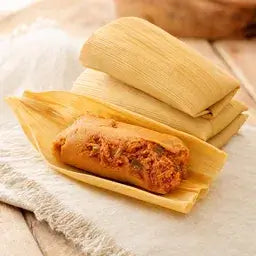 Hatch Chile Tamales
Hand-rolled, multiple fillings
Hatch Chile Tamales
Hand-rolled, multiple fillings
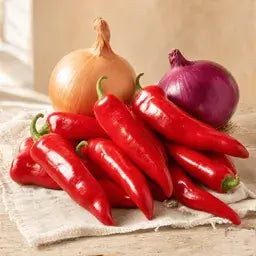 Hatch Produce
Fresh chile, onions, and more
Hatch Produce
Fresh chile, onions, and more
Popular recipes
Start here
New to Hatch Chile Store?
Genuine Hatch Valley chile, roasted to order and shipped from New Mexico.
Shop Best SellersThe Sandia we ship today is NuMex Sandia Select — approximately 9,500 SHU, the Hot tier of our Hatch lineup (NMSU Chile Pepper Institute, CR706). NMSU released Sandia Select in 2014 as an improvement on the original Sandia, developed by Dr. Roy Harper in 1956 and measured at approximately 6,500 SHU. Sandia Select carries the same Hatch Valley heritage with thicker, easier-peeling pod walls and more consistent heat year to year.
What distinguishes Sandia Select from Big Jim is its heat — Big Jim runs around 6,500 SHU (Medium; ours often a touch milder than the cultivar mean), while Sandia Select sits meaningfully hotter at ~9,500 SHU with a clean, lingering warmth. Sandia is also the variety most commonly associated with New Mexican red chile: when pods ripen fully and are sun-dried (we still use the original heirloom Sandia for ristras and traditional dried pods), they develop the deep brick-red color and concentrated smoky flavor that goes into traditional red chile sauce. If you've eaten authentic New Mexican red chile enchiladas at a restaurant in the state, there's a reasonable chance Sandia was involved.
Our Sandia products come from Hatch Valley farms — the same alkaline Rio Grande bottomland and elevation that distinguish genuine Hatch chile from generic peppers grown elsewhere. You'll find frozen roasted Sandia Select chile, Sandia-based sauces and powders, and prepared products in this collection. Sandia is the right pick if you want more heat than Big Jim delivers but aren't ready to step up to Lumbre (12,000+ SHU). See our Heat Level Guide to compare varieties side by side.
Sandia is New Mexico's original hot chile—the variety Hatch Valley growers have planted since 1956 when NMSU breeder Dr. Roy Harper crossed New Mexico No. 9 with an Anaheim-type cultivar to create a pepper built for drying into the dark-red ristras and powders that define red chile cooking. At roughly 6,500 Scoville Heat Units, Sandia delivers the kind of direct, confident heat that locals expect when they answer "Red or Green?" and mean it. Our family has grown Sandia on Franzoy land in the Hatch Valley for generations—connected by both soil and blood to the Biad family, whose seed program helped NMSU's Chile Pepper Institute develop NuMex Sandia Select, a thicker-walled successor with 40% higher yields and the same reliable heat. Every hot product below is Certified Hatch—grown, flame-roasted, and jarred into sauces right here in the valley.
Yummylyle h · Verified
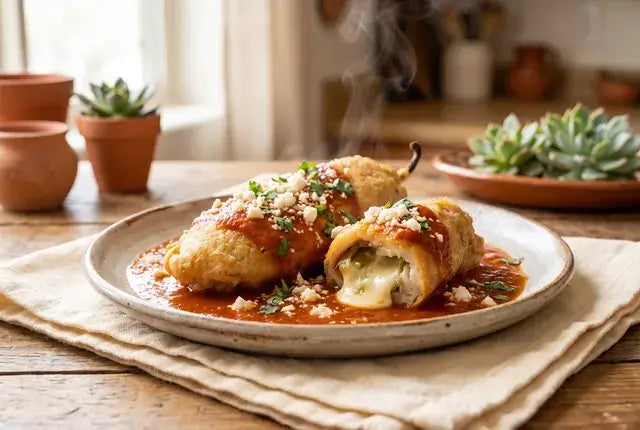
Cheese grits with hatch chillieslyle h · Verified
The flavor was great! I was worried that the Hot might be too hot, but I actually wished it had a bit more kick. I’ll still buy more.Gary K · Verified
I have used Hatch Green Chile for I believe 40 years. Nothing equals the awesome taste. I stay with basic enchiladas and burritos. I've never been disappointed. Even when first trying different recipes. Lave their flavor!Jeffrey G · Verified
The chili taste is out of this world as long as it’s HOT! Mild is good but HOT is magnificent!Richard A · Verified
Absolutely delicious. My brother in law is the one who sent me my first jar. I was hooked.Nancy S · Verified
Wow! Just right amount of heat . Tgank you.Barbara P · Verified
Great chiles,great taste just rightKevin S · Verified
The chili i get from. Chili store is always good and fresh. I recommended to everybody red and greenTerry D · Verified
Astounding! I absolutely can't believe the night and day difference between this product and the lackluster flavor of what I have been buying in cans from my grocery. I wasn't prepared for the smoky intensity of these freshly roasted jarred chilies. Honestly, a spoonful tossed with some cheese and ranchero sauce in a tortilla could turn me vegetarian. And wait until you top a burger with it!Brian C · Verified
This was the first time I tried your hot sauce. OMG it was really tasty. The right amount of ingredients and mixture hit a high 9 for me. I used it on a plate of roasted chicken the first night. It was wonderful. I recommend you buy it. It was worth the wait . ThanksErnesto R · Verified
This is the best green chili sauce I have ever had!!!Shelley B · Verified
Great chopped peppers with mild heat-very tastyJack G · Verified
Had it with my taco's last night, great flavor. I can't wait to try it on other things. I live in Kansas now after growing up in New Mexico. It's hard to find good green chili here. Will keep ordering from you.Mel W · Verified
The best Hatch green chile we have found. We tried many brands and nothing comes close. Delicious at breakfast, lunch and dinner.Susan S · Verified
Very good quality good taste fair price don’t know what else you needDon S · Verified
Anyone that loves green chili will absolutely love this stuff. It’s so good so authentic so reasonably priced highly recommend recommended.Don S · Verified
My order arrived on Tuesday and on Wednesday, i made Mexican Lasagna and Chicken Chorizo/Vegetable soup. I will take both dishes to my eye doctors office. One of the staff members is planning a trip to NM in May...including Hatch and White Sands. I used the pure green chili...medium.A nice bite and fair on the kick. Recipes from Southwest cookbooks.Prudence D · Verified
We love the fresh hatch peppers and once we eat all those we turn to the jar ones. Very delicious we highly recommend!. We ordered once to try these and keep ordering every year!Lisa S · Verified
Excellent! Just pure chili without onion and / or garlicRaechel K · Verified
Excellent, tasty chunks of hatch and good spicealfonso t · Verified
Always enjoy whatever I order from Hatch. It is the best Chile I've ever tasted. Things are a little pricey, but worth every penny. I tell everyone about Hatch.Ronald S · Verified
We love to eat them for our evening meal with Street Taco Tortillos and cheese and bacon or other kinds of meat. Very good quality and excellent in taste when cooking a Mexican Food dish,Frank F · Verified
We can't imagine how we ever went without a jar of these chiles in our pantry. We use them on eggs, hamburgers, in meatloaf, tacos, nachos....everything but on our breakfast cereal! Wonderful flavor.Elssa G · Verified
This is my third order and I absolutely love the 575. It reminds me of Colorado and time spent in New Mexico. This last order got lost in the mail, but when I notified them, they quickly reshipped my order. Thanks for a great product and great company service.William D · Verified
My husband loves Hatch Pure Green Chile roast. He puts it in stew, soups, on burgers, spagetti, sandwiches and even in creamy salad dressings. His variety of choice is HOT. We've gifted some to my nephew also and his family also loves it. I prefer medium, but it sells out fast.Roscoe S · Verified
It arrived today. No leakage this time.Connie C · Verified
every morning I put it on my migasdennie J · Verified
Never received. Myrna worked to replace the missing delivery. Thank you.Brenda O · Verified
Sauce was good. However be the only jar I tried because of the shipping cost game they play with you. Then I get bombarded with emails, including this survey none of which I agreed too. You know what I'm talking about. Buy something and now you are there email whipping boy. Another great reason I won't buy more.John B · Verified
I very much like the hot sauce, it's a "fresh" way to add heat to other condiments. I've used the Hatch Hot with General Tso sauce to bring the heat, and I've used the Hatch 575 Hot to add heat to pizza sauce ! I got my jar last week, and it's half gone already. I Love your ad where your man is eating a double burger from the tailgate while pouring on the Chili..."We don't sell water"...Love that add, watched it 8 times..! I look forward to ordering more and trying the different varieties.Arlie W · Verified
Good heat. A little sweet.Sally A · Verified
Sandia is a cultivar within the New Mexican pod type—the family of long green chiles that New Mexicans roast, peel, freeze, and argue about at every meal. Its formal designation is NuMex Sandia, the "NuMex" prefix marking it as a product of New Mexico State University's chile breeding program, the same lineage that produced Big Jim, New Mexico 6-4, and more than fifty other cultivars over the past century. Among those varieties, Sandia occupies a specific and irreplaceable role: it is New Mexico's original hot chile.
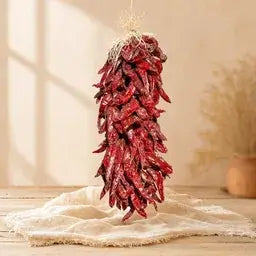
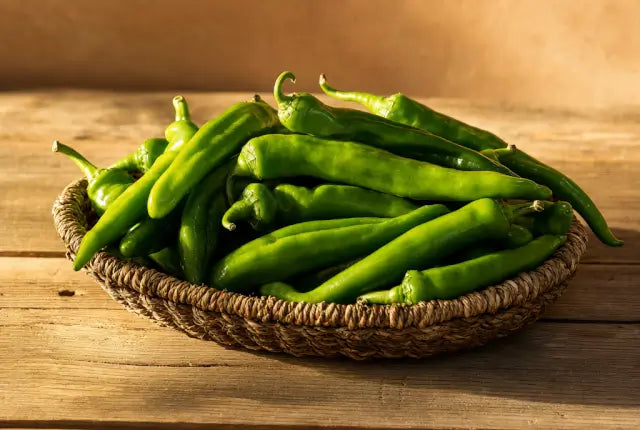
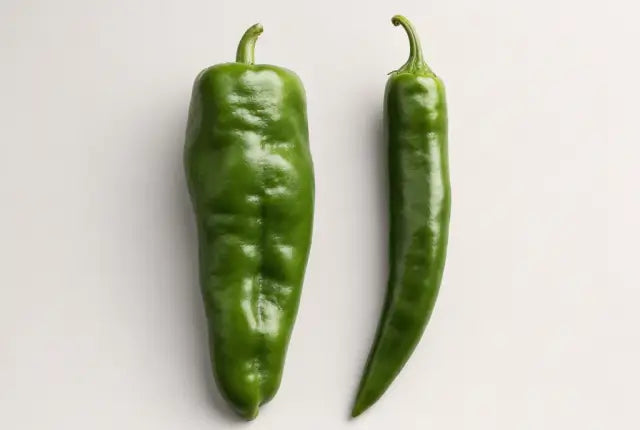
A mature Sandia pod typically measures six to seven inches long and about an inch and a half wide—noticeably shorter and narrower than the eight-to-twelve-inch Big Jim that dominates the medium-heat market. The walls are thinner, the surface slightly roughened, and the shoulders rounded, tapering gradually to a pointed blossom end. Those physical traits are not accidental. Sandia was bred for a purpose that Big Jim was never designed to fill: drying. Its thinner flesh dehydrates quickly on the plant in the field, making it the ideal candidate for the dark-crimson dried red chile pods, chile powder, red chile flakes, and the iconic ristras that hang from porches across New Mexico every autumn.
The heat level registers at approximately 6,500 Scoville Heat Units—roughly comparable to the intensity of a typical Big Jim pod and several times hotter than the mild New Mexico 6-4. That heat is not decorative. When New Mexicans answer "Red or Green?" and want genuine fire behind the answer, the chile in the pot is almost certainly Sandia. It is the variety behind the red chile sauce ladled over Christmas-style enchiladas, the heat in a properly made carne adovada, and the backbone of every roadside ristra stand from Hatch to Santa Fe.
In the mid-1950s, NMSU horticulturist Dr. Roy Harper was working to solve a practical problem: New Mexico's chile growers needed a variety that matured earlier than the existing standard—New Mexico No. 9, the mild cultivar that Dr. Fabián García had released decades earlier—and that carried enough heat to satisfy the demand for spicy red chile products. Harper crossed New Mexico No. 9 with a California Anaheim-type pepper and selected for pods that dried efficiently, held their red color, and delivered consistent pungency. The result was a variety he initially called Sandia A, released in 1956.
In 1967, the New Mexico Crop Improvement Association simplified the name to just Sandia—a nod to the Sandia Mountains east of Albuquerque, whose peaks glow watermelon-pink at sunset (the Spanish word sandía means "watermelon"). The name stuck, and the variety quickly became the standard hot chile across the Mesilla Valley and the Hatch growing region. Green pod yields averaged over 12,000 pounds per acre—33 percent higher than New Mexico No. 9—and the pods dried down cleanly in the field, reducing processing costs for commercial dehydrators.
For the next half-century, Sandia defined what "hot" meant in New Mexico cuisine. While Big Jim arrived in 1975 and claimed the medium-heat and relleno market, and milder cultivars like Joe E. Parker served customers who wanted flavor without fire, Sandia remained the workhorse of the hot tier—the variety that growers planted when processors ordered chile with spine, and the pepper that home cooks in Las Cruces, Mesilla, and Hatch dried on their own rooftops each September.
The story of Sandia chile in the Hatch Valley is inseparable from the families who grew it, dried it, and kept its seed lines alive. Two of those families—ours and the Biads—share a connection that predates their arrival in New Mexico by an ocean and a generation.
Back in Italy, two Formulo sisters each married into a different family: one became a Biad, the other a Franzoy. Both families eventually immigrated to the United States, drawn by the same promise of farmable land and economic opportunity. The Franzoys arrived first. Joseph Franzoy and his wife Celestina settled in Salem, New Mexico—just south of Hatch—in 1917, living in a tent with seven children while they built an adobe homestead and planted the valley's first commercial chile crop. Joseph's descendants would go on to develop Big Jim with NMSU, help found the Hatch Chile Festival, and farm thousands of acres of chile across the valley.
The Biad family followed a parallel path: from Italy to Brooklyn, then west to New Mexico in the late 1940s, where the elder Biad began farming chile and drying red pods on his own roof. His sons built Biad Chili into one of the most important chile seed and processing operations in southern New Mexico—a company that today runs three dehydrating plants, supplies seed to growers across the valley, and has partnered with NMSU since 1951 on breeding and seed production. The two families—Franzoy and Biad, connected by the Formulo sisters and separated only by which side of the Rio Grande they chose to farm—were instrumental in building New Mexico's chile industry from a handful of irrigated acres into a multi-hundred-million-dollar economic engine.
That family connection is not just historical. It is directly relevant to the Sandia chile you buy from us. The Franzoy farms grew Sandia for decades, and when the variety began drifting—losing its consistency, as all open-pollinated cultivars eventually do—it was Chris Biad of Biad Chili who worked hand-in-hand with NMSU's Chile Pepper Institute to develop and commercialize the improved successor. The families that built this industry are the same families still protecting its seed.
By the early 2000s, growers were voicing a familiar complaint—one that echoed the same genetic drift that had eroded Big Jim over the preceding decades. The commercially available Sandia seed had been open-pollinated for nearly fifty years without rigorous selection pressure. Cross-pollination from neighboring fields, compounded by generations of growers saving their own seed, had gradually blurred the cultivar's identity. Heat levels varied more than they should have. Yields were declining. The pods, which had always been thin-walled by design, had become even thinner and less uniform, making them difficult to roast and peel for the green chile market.
The original Sandia had been released as a red-drying variety, and its thin walls were an asset for that purpose. But as consumer demand for hot green chile grew—particularly among buyers who wanted more heat than Big Jim could deliver—growers found themselves trying to sell Sandia as a dual-purpose pepper, and the variety simply was not built for it. The walls were too thin to roast cleanly. The pods were too small to stuff for rellenos. Processors wanted a Sandia with the same heat and flavor but the physical characteristics of a modern green chile variety: thicker walls, smoother skin, easier de-stemming. Southern New Mexico's growers and processors approached NMSU's chile breeding program with a direct request: give us a better Sandia.
The Chile Pepper Institute's response began in 2001 at the Leyendecker Plant Science Research Center, five kilometers south of Las Cruces. Dr. Paul Bosland—the "Chileman" who had already overseen the Heritage restorations of Big Jim and New Mexico 6-4—and researcher Danise Coon planted approximately 450 plants of commercially available Sandia and began the slow, methodical work of classical plant breeding. No genetic modification. No shortcuts. Just years of selecting individual plants that showed the traits growers had asked for: thicker fruit walls, longer pods, uniform branching, consistent heat, and—critically—the deep, earthy flavor that had made Sandia the standard hot chile in the first place.
The team turned to old Sandia seed stock—likely traceable to the original 1950s genetics—and cross-referenced it against more than twenty-five standard horticultural traits that the green chile industry requires: dark green color at maturity, a pointed tip, two locules, thick fruit walls, an attached calyx that de-stems cleanly by hand, and a heat level that processors could count on. Each generation of selected plants was grown in isolation cages to prevent the accidental cross-pollination that had caused the drift in the first place. The process took eight years.
The result, released in 2014 and published in HortScience, was NuMex Sandia Select. The improvements were substantial. Yield jumped by up to 40 percent over the original Sandia. Pods grew longer, with smoother, thicker walls that roasted and peeled easily—a transformation confirmed by Chris Biad of Biad Chili, who ran field-harvested samples through his company's commercial flame-roasting line and reported that Sandia Select skinned uniformly and processed with the same ease as the best green chile varieties. The heat level came in at 9,500 SHU—hotter than the original Sandia's roughly 6,500 SHU—and, more importantly, consistent from plant to plant. Two informal taste panels, one at NMSU and one composed of green chile processor executives, confirmed the flavor and aroma met the industry's expectations.
Biad Chili then did what it has done for every Heritage and Select variety that NMSU has released: it took the small quantity of foundation seed the university produced and mass-multiplied it, making Sandia Select commercially available to growers across the valley. A portion of the sales supports NMSU's Endowed Chile Pepper Research Chair—a direct reinvestment in the science that keeps New Mexico's chile industry alive. The partnership between Biad Chili and the Chile Pepper Institute, stretching back more than seven decades, is the reason improved seed reaches the farmers who grow the chile that ends up in the products on this page.
Understanding where Sandia fits among the Hatch chile varieties helps explain why it exists and what role it plays in the kitchen. Each cultivar was bred for a specific purpose, and heat level is only one axis of difference.
| Variety | Heat (SHU) | Pod Length | Wall Thickness | Primary Use |
|---|---|---|---|---|
| NM 6-4 | 1,000–1,500 | 6–8 in. | Thick | Mild green chile, roasting |
| Big Jim | 2,000–7,000 | 8–12 in. | Very thick | Rellenos, medium green chile |
| Sandia | ~6,500 | 6–7 in. | Thin–medium | Dried red chile, ristras, hot green |
| Sandia Select | ~9,500 | 7–8 in. | Thick | Dual-use: hot green chile & red drying |
| Barker | 10,000–20,000 | 5–6 in. | Thin | Extra-hot green chile, salsas |
| Lumbre | 12,000+ | 4–6 in. | Thin | X-Hot, extreme heat applications |
| Anaheim | 500–2,500 | 6–10 in. | Thick | Not a Hatch variety |
The critical distinction: Sandia sits in the sweet spot between the medium warmth of Big Jim and the aggressive burn of extra-hot varieties like Barker and Lumbre. It is hot enough to make your forehead sweat but controlled enough that the chile's actual flavor—earthy, slightly smoky, with a clean finish—comes through intact. That balance is why Sandia has been the hot-tier standard for nearly seventy years, and why Sandia Select was engineered to preserve it rather than simply chase higher Scoville numbers.
The same thin walls that made the original Sandia ideal for drying are the reason cooks sometimes find their chile rellenos tough or stringy when they pick the wrong pod. A thin-walled chile char-roasts fast, but the skin shrinks tight against the flesh and pulls hard at the fibers underneath when you peel — leave it on the heat a beat too long and you're peeling a leathery pod instead of a tender one. For rellenos, we point our family and our customers toward Big Jim or NuMex Sandia Select, both of which carry thicker walls and stuff cleanly without tearing. Save the original-line Sandia for red sauce, powder, and ristras, where the thin-wall trait is a feature.
For relleno and tamale recipes, see our How to cook with Hatch chile pillar and the recipes page.
Sandia's flavor is fundamentally different from Big Jim's, and the difference matters in the kitchen. Where Big Jim leads with a round, slightly sweet warmth that builds slowly, Sandia announces itself immediately. The heat arrives first—a direct, confident pungency that you feel across the front of the tongue—and then gives way to an earthy, almost mineral depth that reflects the volcanic soils and extreme diurnal temperature swings of the Hatch Valley terroir. There is a faint smokiness even in unroasted pods, and that quality intensifies dramatically when the chile is flame-roasted or dried to its mature red stage.
In dried red form—the application Sandia was originally bred for—the flavor becomes richer and more concentrated. The heat softens slightly while the earthy and fruity notes deepen into something almost raisin-like, which is why Sandia-based red chile powder is the backbone of authentic red chile sauce. The complexity that emerges in a slow-simmered pot of red—where the powder reconstitutes and marries with garlic, cumin, and oregano—is a flavor you cannot replicate with a mild variety no matter how much of it you use.
Sandia's dual identity—hot green chile and premium dried red chile—makes it one of the most versatile cultivars in the Hatch lineup. Here are the primary ways to use it, with links to the products that make each application easiest.
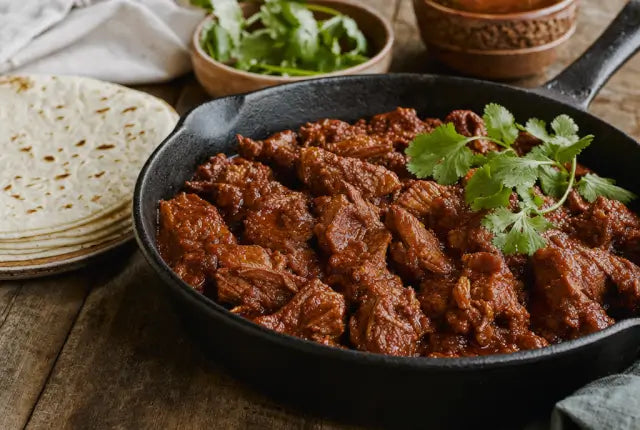
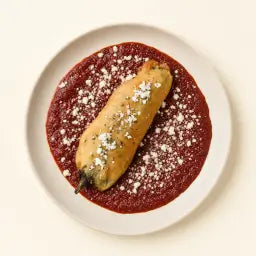
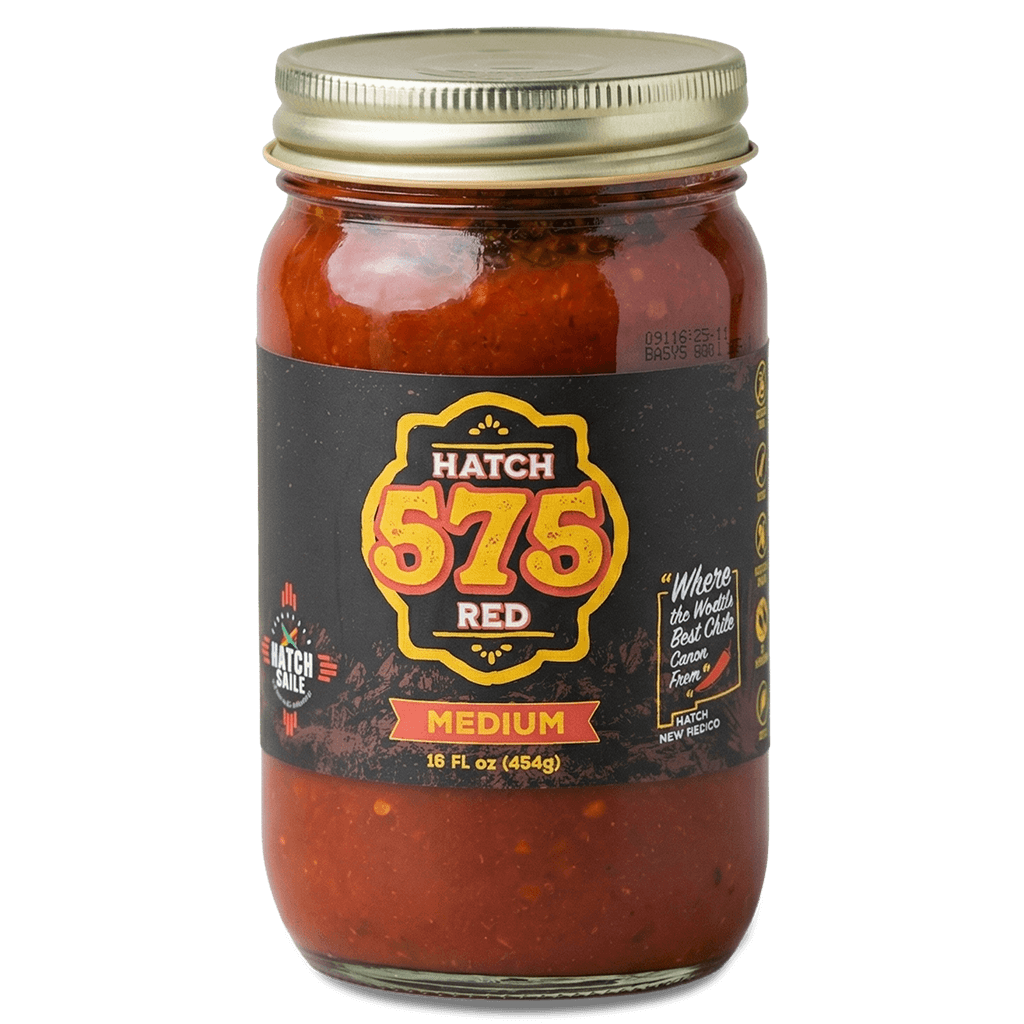
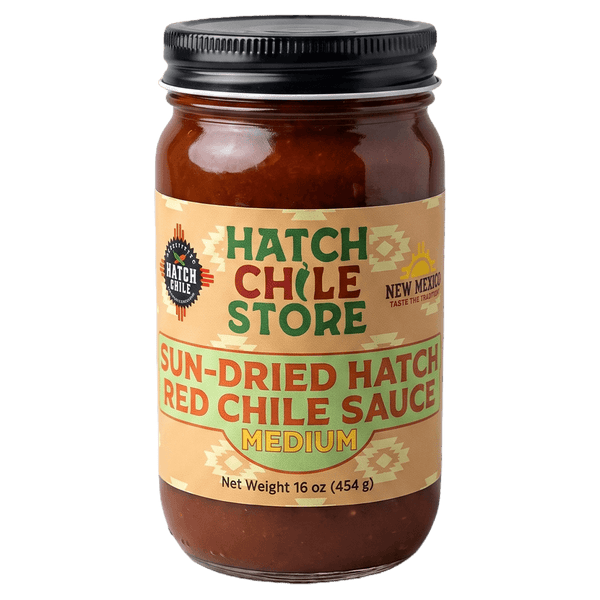
This is Sandia's signature application. Hatch Red Chile Sauce starts with dried Sandia pods rehydrated and blended with garlic and salt into a smooth, rust-colored sauce that transforms enchiladas, huevos rancheros, and tamales. If you prefer to start from scratch, our dried red chile pods or red chile powder let you control the consistency and intensity yourself. For a ready-to-pour option, the 575 Red Chile Sauce brings the same flavor in jarred form.
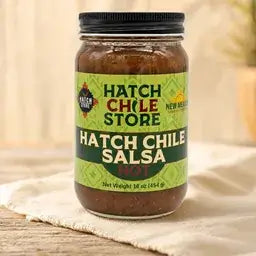
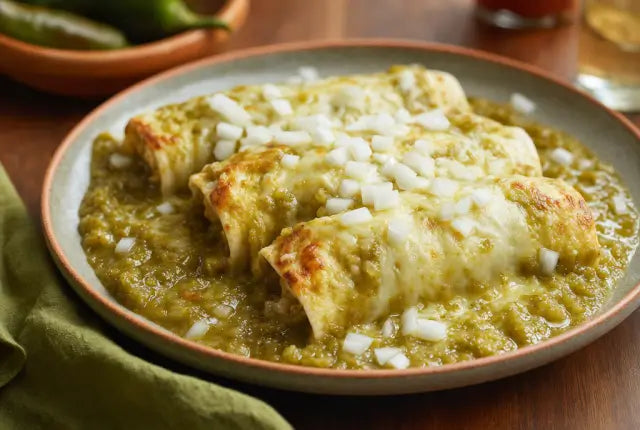
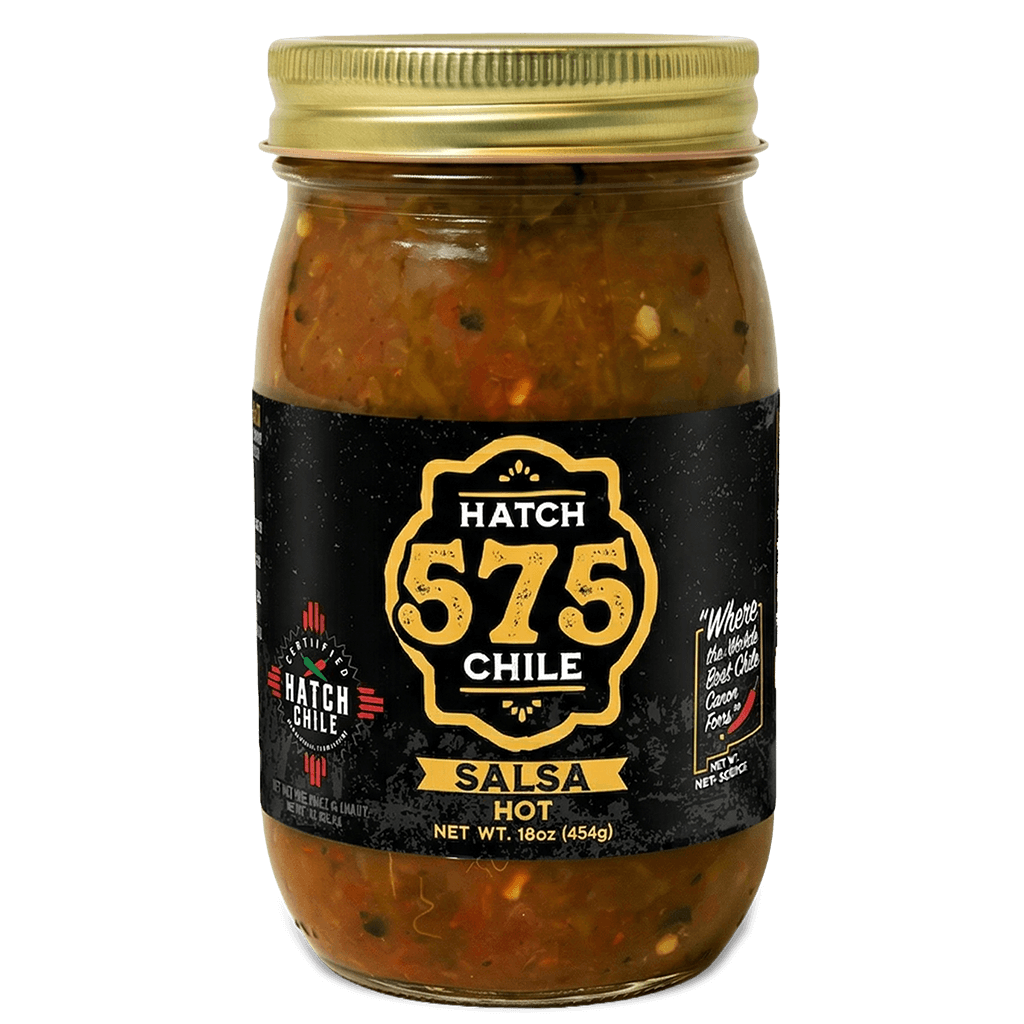
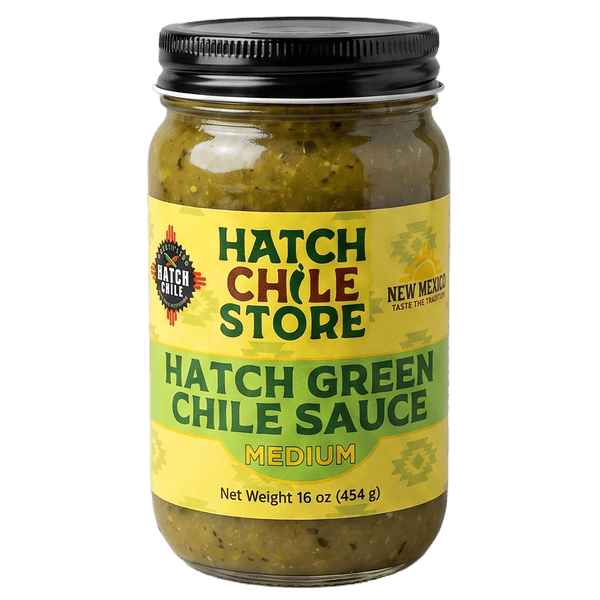
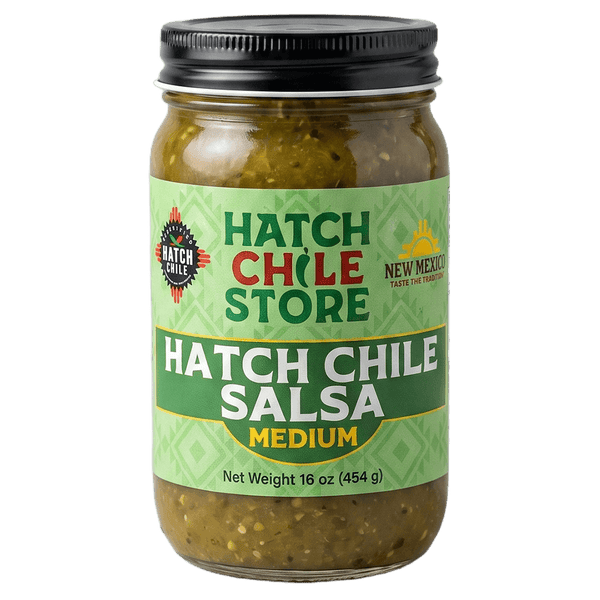
With the development of Sandia Select's thicker walls, Sandia has become a legitimate hot green chile option. Our Hatch Green Chile Sauce and 575 Green Chile Sauce both come in hot versions that deliver the kind of heat Sandia is known for. For salsa, the Hatch Chile Salsa, New Mexico Salsa, and 575 Green Chile Salsa all offer hot heat levels that let Sandia's flavor shine through tortilla chips, tacos, and burritos.
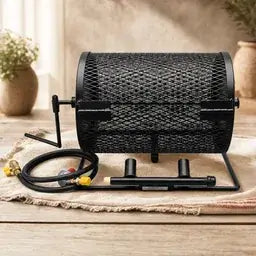
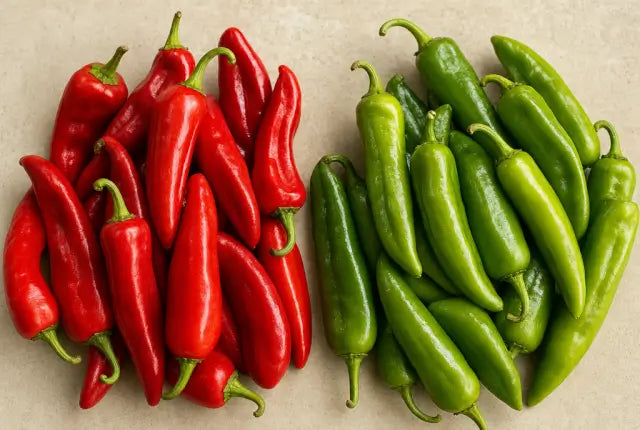
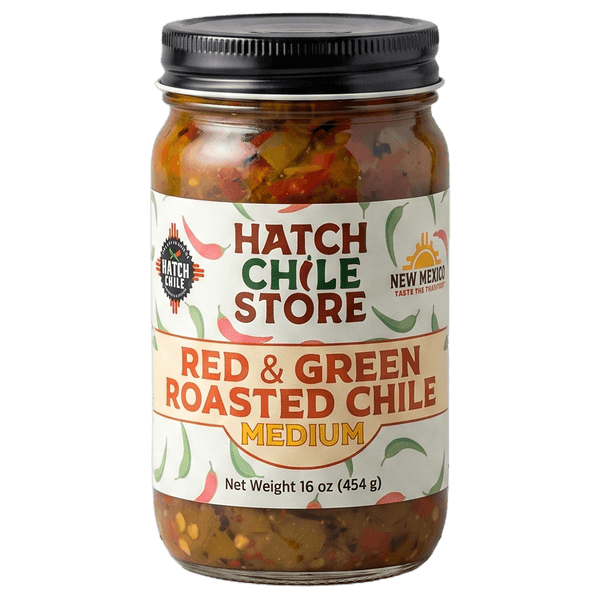
During Hatch chile season, we offer fresh Hatch green chile in hot heat levels—pods shipped within twenty-four hours of picking so you can roast them yourself over a grill, under a broiler, or in a drum roaster. For year-round access, our flame-roasted frozen green chile delivers the same smoky, spicy intensity straight from the freezer to your skillet. We also offer hot heat in jarred roasted green chile that is shelf-stable and ready to add to any dish.
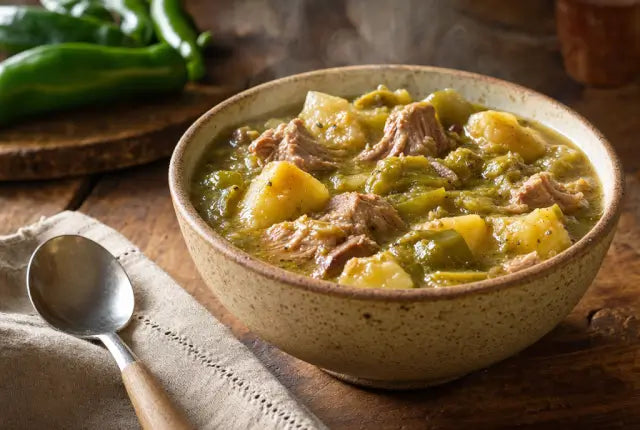
Sandia-level heat is what makes Hatch Green Chile Stew and Posole taste like the real thing—the kind of slow-simmered comfort food that warms you from the inside on a cold New Mexico night. Our prepared meals like Beef Chimichangas and Chicken Chimichangas also come in hot options for customers who want spice without the prep work.
Sandia heat pairs exceptionally well with grilled meats and smoky flavors. Our BBQ Sampler includes Hatch chile BBQ sauces that use green chile for a distinctly New Mexican take on outdoor cooking. For a condiment that adds both heat and sweetness, Hatch Hot Honey drizzles over pizza, fried chicken, and cornbread with a slow burn that builds across multiple bites.
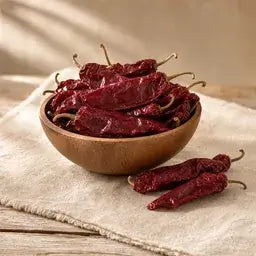
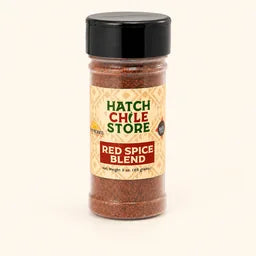
For pantry staples that last, dried Hatch red chile pods can be toasted and rehydrated into sauce, or strung into ristras. Red chile powder and green chile powder add Hatch flavor and heat to rubs, marinades, soups, and scrambled eggs. Our freeze-dried green chile rehydrates in seconds and travels anywhere.
Fresh and frozen chile is a perishable crop moving across the country in a cardboard box, and once in a while a shipment shows up in worse shape than it left. Here is how we handle it.
Chile that arrived rotten or moldy. If you open the box and the pods are slimy, smell off, or show any visible mold, set them aside and email us a photo at orders@hatch-green-chile.com the same day. This usually means the box sat too long in a hot truck or on a porch — not something you did wrong. We'll replace the affected portion or refund it. We'd rather hear about it the day it arrives than have you push through a bad bag.
A frozen order that thawed in transit. Our roasted frozen chile ships with dry ice and is built to arrive cold. If your bags are still firm and cold to the touch, you're fine — refreeze or use within a few days. If the chile is fully thawed and warm, or the box was sitting outside, don't refreeze it; send us a photo of the box and the bags and we'll send a replacement. Dry ice doesn't always survive a delayed delivery, and that risk lives with us, not with you. (See our spoiled or thawed perishable page for the full process.)
Jars that didn't hold their seal. Every jar of our sauce, salsa, and chopped chile leaves the line vacuum-sealed, with the safety button on the lid pulled down tight. If you take a jar out of the box and the button is already popped up, the seal failed in transit and the contents are not safe to eat — toss it and email us. An intact, sealed jar that's a few months past its printed date is almost always still good; a jar with a raised button on day one is not.
Dates on the label. Our jarred products carry a "best by" date roughly two years out from production, stamped on the lid. Frozen roasted chile is dated on the bag and is best within a year of harvest, though it stays safe and tasty well past that as long as it stayed frozen. If a product showed up at your door already past its date, that is our error to fix — write us and we'll ship a fresh one.
The short version: if anything looks, smells, or feels wrong when the box opens, take one photo and email us. Six generations of our family have farmed this valley, and we know what good chile is supposed to look like coming out of a freezer or off a shelf. We don't argue about replacements.
Sandia's story is, in miniature, the story of Hatch chile itself. A variety bred for a specific purpose by university researchers and valley growers. Decades of open-pollinated cultivation that slowly degraded the original genetics. An industry partnership—between the Chile Pepper Institute and a family-owned seed company—that restored the variety through classical breeding and returned improved seed to the same valley where the original was planted. That arc, from creation through drift to restoration, has repeated with Big Jim, with New Mexico 6-4, and now with Sandia. It is the central tension of New Mexico's chile heritage: how do you keep a living, open-pollinated crop true to its identity across generations?
The answer, every time, has involved the same network of people: NMSU breeders, valley growers, the seed stewards at Biad Chili, and organizations like the Hatch Chile Association that protect the Hatch name from dilution by out-of-state imitations. Preston Mitchell, our founder and a fifth-generation descendant of Joseph Franzoy, serves on the HCA board—working alongside the same families, including the Biads, whose shared history reaches back to those two Formulo sisters in Italy. When you buy Sandia chile from us, you are buying from the families who grew it, who helped breed its successor, and who are actively working to ensure that "Hatch chile" on a label means something real.
| Full Name | NuMex Sandia |
| Species | Capsicum annuum |
| Pod Type | New Mexican |
| Released | 1956 (as Sandia A); renamed Sandia in 1967 |
| Bred By | Dr. Roy Harper, NMSU |
| Parentage | New Mexico No. 9 × California Anaheim type |
| Heat Level (Sandia) | ~6,500 SHU (Hot) |
| Heat Level (Sandia Select) | ~9,500 SHU (Hot) |
| Pod Length | 6–7 in. (Sandia); 7–8 in. (Sandia Select) |
| Wall Thickness | Thin–medium (Sandia); Thick (Sandia Select) |
| Yield Improvement | Sandia Select yields up to 40% more than original |
| Flavor Notes | Earthy, slightly smoky, mineral depth, clean finish |
| Primary Use (Green) | Hot green chile sauce, salsas, stews |
| Primary Use (Red) | Red chile sauce, powder, ristras, carne adovada |
| Certified Hatch | Yes — Hatch Chile Association certified |
